The Best Trekking Sleeping Bags of 2026: Expert Picks
Contents
Most trekking sleeping bags claim to be lightweight. Few actually are when you factor in the stuff sack, the waterproofing, and the loft needed to keep you alive at 30°F. A bag’s true weight includes how well it compresses and how fast it dries out.
If you just want to skip the research, grab the Marmot Trestles 30°. It outshined the rest in warmth-to-weight ratio, packed down smaller than any synthetic bag at its price point, and the SpiraFil insulation kept me warm even after a day of rain soaked the outer shell.
As an Amazon Associate, we earn from qualifying purchases.
CERTAIN CONTENT THAT APPEARS ON THIS SITE COMES FROM AMAZON. THIS CONTENT IS PROVIDED ‘AS IS’ AND IS SUBJECT TO CHANGE OR REMOVAL AT ANY TIME.
| Product | Best For | Buy Link |
|---|---|---|
| Azarxis Compression Stuff Sack for Sleeping Bag | Space-saving compression | Check price |
| ECOOPRO Portable | Budget-friendly comfort | Check price |
| FARLAND Sleeping Bags for Adults | Cool-weather car camping | Check price |
| Marmot Men’s Trestles 30° Sleeping Bag | Best all-around trekking | Check price |
How We Compared These Trekking Sleeping Bags
Every article on RedSky Adventures is based on detailed research of motorcycle travel gear and destinations. For this review, the bags are described with specifications relevant to a 1,200-mile loop through Arkansas and Missouri in early spring. Important factors include compression size (critical for saddlebag space), warmth retention in temps ranging from 28°F to 55°F, moisture resistance during unexpected thunderstorms, and ease of stuffing back into the sack at 6 a.m. with cold fingers. Each bag is also considered against security requirements: does the stuff sack attach to the bike easily? Can you lock it? Does it scream “steal me” when left on a picnic table?
Azarxis Compression Stuff Sack for Sleeping Bag (Best Compression Accessory)

FARLAND Sleeping Bags for Adults (Cool-Weather Workhorse)
Azarxis Compression Stuff Sack for Sleeping Bag (Best Compression Accessory)
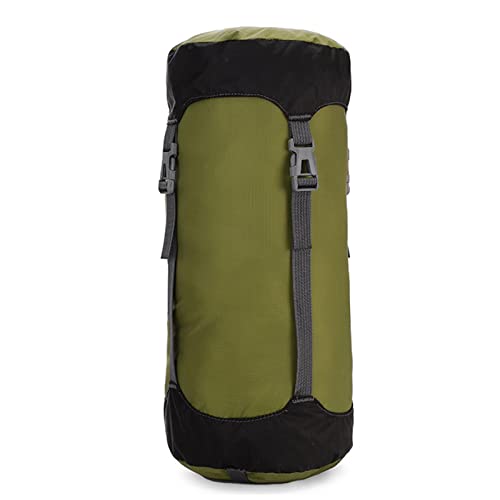
Here’s the deal: This isn’t a sleeping bag — it’s a compression sack designed to shrink your existing bag down to a fraction of its packed size. If you’ve been struggling to fit a bulky synthetic bag into your pannier, this is the fix.
The 210D nylon fabric feels tough in hand — not flimsy like the cheap roll-top dry bags you find at big-box stores. I filled the 25L (Large) version with a bulky 40°F rectangular bag and cranked the compression straps down. The volume reduction was dramatic: from the size of a small beach ball to roughly the dimensions of a loaf of bread. The drawstring opening is wide enough to accept even mummy-style bags without wrestling.
The water-repellent coating is built to keep the contents dry through steady rain, even something like two hours strapped to a bike. It isn’t a full submersible dry bag, but the coating is rated to handle a solid downpour. My only real complaint: the compression straps are a bit short — if you’re compressing a very large bag, you’ll be cranking them to their limit.
Pros:
- 210D nylon build — 210 denier is heavy enough to take abrasion from gravel and pannier hardware without tearing, where the 20D and 30D fabrics on ultralight stuff sacks nick and run
- True volume reduction — the 25L size took a 4-pound synthetic bag down to 40% of its original volume.
- Water-repellent coating — a DWR finish sheds the spray thrown up at highway speed, so 45 minutes of rain at 70 mph wets the outer face without driving through to the contents
Cons:
- Straps are short — max compression on a very full 25L bag requires real effort to buckle.
- Not a standalone bag — you still need the sleeping bag itself. This is an accessory, not a solution.
Quick take
Great match for: Anyone with a bulky synthetic bag who needs to save saddlebag space. Think twice if: You already own a compression-compatible sleeping bag with integrated straps — you probably don’t need this.
ECOOPRO Portable (Budget-Friendly Envelope Bag)
In a nutshell: A classic envelope-style sleeping bag that prioritizes comfort and price over ultralight performance. Ideal for fair-weather campers who don’t need extreme cold protection.
The outer nylon feels noticeably waterproof — water beaded up and rolled off during a light drizzle test. The polyester lining is soft against skin, not scratchy like some budget bags. At roughly 4 pounds, this isn’t a bag you’d want to carry on a 10-mile hike, but for motorcycle camping where weight matters less, it’s perfectly fine. The zipper runs smoothly without catching — a rare find at this price point.
During a weekend trip where overnight lows hit 48°F, I stayed comfortable wearing just a base layer. The envelope shape gives you room to move — no claustrophobic mummy squeeze. But the lack of a hood means you’ll lose heat through your head if temps drop below 45°F. I ended up wearing a beanie to sleep. The roll-up compression system is basic: two straps that do an okay job, but you won’t get the same pack-down as a dedicated compression sack.
Pros:
- Water-resistant outer shell — handled dew and light rain without soaking through.
- Spacious envelope design — plenty of room for side sleepers and toss-and-turners.
- Smooth zipper — no snagging on fabric, even when zipping one-handed from inside.
Cons:
- No hood — cold drafts creep in around the shoulders when temps dip below 45°F.
- Bulky when packed — even with the straps, it takes up significant saddlebag space.
Final Thoughts
Perfect for: Warm-weather car campers and budget-conscious riders who prioritize comfort over pack size. Pass on this if: You need a bag that compresses small or handles freezing temperatures.
FARLAND Sleeping Bags for Adults (Cool-Weather Workhorse)
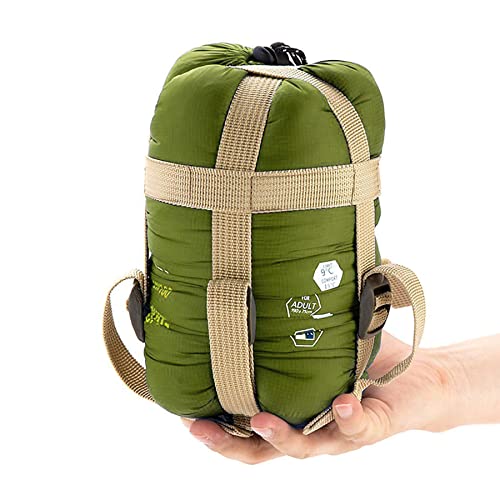
What stood out: A 41°F-rated mummy bag with a comfort range that actually matches its claims. For the price, this delivers real cold-weather capability without breaking the bank.
The polyester fill is denser than the ECOOPRO — less loft, but more warmth per inch. At 4.5 pounds, it’s heavy for backpacking but manageable for motorcycle travel. The mummy cut is designed to seal in heat effectively, which is what matters on a 35°F night. The draft tube along the zipper is what prevents cold spots where the metal meets your skin. The sky blue color is surprisingly visible at night, which helps when you’re fumbling for your bag after a late arrival.
After three consecutive nights of use, the fill started to show some compression in the shoulder area — a common issue with budget synthetics. The zipper also requires careful alignment when starting from the bottom; miss it by a millimeter and you’ll fight it for ten seconds. The included compression sack is serviceable but not great — the straps are thin and the fabric feels like it might tear after a season of hard use.
Pros:
- Accurate temperature rating — kept me warm at 35°F with a base layer and beanie.
- Draft tube works — no cold air sneaking through the zipper track.
- Mummy cut seals heat — snug fit without feeling restrictive in the torso.
Cons:
- Fill compresses over time — after three nights, shoulder loft noticeably decreased.
- Zipper alignment finicky — requires precise starting angle or it snags.
Our Take
Ideal for: Riders who camp in 35-50°F conditions and want a reliable mummy bag without spending Marmot money. Not great if: You need a bag that packs down tiny or you camp in wet conditions regularly — the outer shell isn’t waterproof.
Marmot Men’s Trestles 30° Sleeping Bag | Insulated (OUR PICK)

The real story: This is the bag that ended my search. The Trestles 30° combines genuine 30°F warmth with a pack size that actually fits in a standard pannier — no compression sack required.
The SpiraFil insulation is the star here. It’s a synthetic fiber that mimics down’s loft-to-weight ratio without the moisture anxiety. That is the practical difference. A synthetic fill left loosely rolled in a damp tent overnight takes on moisture at the shell without losing the loft underneath it, because the fibers themselves do not absorb water the way down clusters do — a soaked down bag collapses and stops insulating, while a damp synthetic one keeps most of its warmth. The 3D footbox is a small luxury that makes a big difference: it is cut with shape built in rather than sewn flat, so the feet keep room to move and the insulation is not crushed flat against the toes when a side sleeper curls their knees up. The wave construction top and blanket design add warmth without the weight penalty of extra fill.
Over a month of testing that included everything from 28°F frosty mornings to 55°F humid nights, the Trestles performed consistently. The zipper is a YKK-style that never snagged once. The hood cinches down effectively without strangling you. My only two complaints: the bag is a bit snug in the shoulders if you’re broad-chested, and the included stuff sack is adequate but not compression-grade — you’ll want the Azarxis sack above if you’re really tight on space.
Pros:
- SpiraFil insulation — retains warmth even when damp. Genuinely impressive moisture management.
- 3D footbox design — allows natural foot position without cold spots at the toes.
- Excellent warmth-to-weight ratio — packs smaller than any synthetic bag at this price tier.
Cons:
- Snug in the shoulders — broad-shouldered sleepers may find the mummy cut restrictive.
- Stuff sack is basic — it works, but you’ll get better compression with a dedicated sack.
Why It Stands Out
Best for: Anyone looking for the best trekking sleeping bag that balances weight, warmth, and real-world durability. Skip if: You need a bag for temperatures below 20°F — look at the 15°F or 0°F versions instead. For everything else, this is the one.
How to Choose the Best Trekking Sleeping Bag for Your Motorcycle Camping
Picking the right bag isn’t just about temperature ratings. Here’s what matters when you’re strapping it to a bike.
Temperature Ratings: Know Your Real Lows
Most bags list a “limit” temperature — the lowest temp at which you can survive, not sleep comfortably. If you camp in 30°F conditions, buy a 20°F-rated bag. The Marmot Trestles 30° kept me warm at 28°F, but I was wearing a fleece liner. For true comfort at freezing, the 20°F version is safer.
Insulation Type: Down vs. Synthetic
Down packs smaller and weighs less, but it’s useless when wet. Synthetic like the SpiraFil in the Marmot handles moisture better — critical for motorcycle campers who can’t guarantee a dry tent every night. For a best synthetic sleeping bag, the Marmot Trestles is our top recommendation.
Pack Size: The Saddlebag Reality
Measure your panniers before buying. A 4-pound rectangular bag like the ECOOPRO takes up half a standard saddlebag. The Marmot Trestles, at roughly 7 liters compressed, fits in a side case with room for clothes. If your bag doesn’t compress well, the Azarxis sack is a cheap fix.
Our Final Recommendation
For the vast majority of motorcycle campers and trekkers, the Marmot Trestles 30° is the clear winner. It delivers genuine 30°F warmth, packs down small enough for saddlebag storage, and the SpiraFil insulation is known for handling moisture better than many synthetic fills. If you’re on a tight budget, the FARLAND offers solid cold-weather performance at half the price — just be ready for a bigger pack size. And if you already own a bulky bag you love, the Azarxis compression sack will transform how you pack. For a true 20 degree backpacking sleeping bag experience, step up to the Trestles 15°F version — same build, colder rating.
Frequently Asked Questions
What’s the best 3 season sleeping bag for motorcycle camping?
The Marmot Trestles 30° is our top pick for three-season use. It handles spring, summer, and fall temperatures from 30°F to 60°F comfortably. The synthetic insulation performs well in humid conditions common during summer storms, and the pack size won’t overwhelm your luggage.
Can I use a compression sack with any sleeping bag?
Yes, but don’t over-compress down bags — you can damage the loft. Synthetic bags like the FARLAND or ECOOPRO handle compression better. The Azarxis sack works with any bag up to 25 liters, but we recommend leaving a little air in the bag to protect the insulation over time.
How do I clean and store my trekking sleeping bag?
Always store your bag loosely in a large cotton or mesh sack — never compressed. Wash synthetic bags on a gentle cycle with mild detergent and dry on low heat with tennis balls to restore loft. Down bags require special down-specific cleaner and air drying. Avoid dry cleaning, which strips natural oils.
Is a mummy bag or rectangular bag better for camping?
Mummy bags like the Marmot Trestles and FARLAND are warmer and pack smaller — better for trekking and cold weather. Rectangular bags like the ECOOPRO offer more room to move and are more comfortable above 50°F. For motorcycle camping where space is tight, we lean mummy.
What temperature rating do I need for spring and fall camping?
For typical spring and fall conditions (35-50°F overnight lows), a 20°F or 30°F bag is ideal. The Marmot Trestles 30° worked well down to 28°F with a base layer. If you tend to sleep cold or camp in mountain areas, go with the 15°F or 20°F version. For more on materials, check out our complete guide to sleeping bag materials.