The Best Water Filter for Camping in 2026
Contents
We’ve all been there — staring at a murky stream, stomach growling from thirst, wondering if that gurgle you just heard was a fish or something worse. Having a reliable way to make that water drinkable isn’t just about convenience; it’s the difference between a great trip and a really bad afternoon. After months of hauling these filters into the backcountry, testing them on everything from alpine lakes to cattle-trough-brown puddles, we’ve got strong opinions.
Our top recommendation for most people is the MSR MiniWorks EX. It’s not the cheapest or the lightest, but it’s the one we trust when the water looks truly sketchy and we’re miles from the nearest tap. For the full breakdown of why, keep reading.
As an Amazon Associate, we earn from qualifying purchases.
CERTAIN CONTENT THAT APPEARS ON THIS SITE COMES FROM AMAZON. THIS CONTENT IS PROVIDED ‘AS IS’ AND IS SUBJECT TO CHANGE OR REMOVAL AT ANY TIME.
| Product | Best For | Buy Link |
|---|---|---|
| BKLES Water Filter Camping – Electric Portable Water Purifier | Fast electric filtration | Check price |
| Waterdrop Gravity Water Filter Straw | Large group gravity system | Check price |
| MSR MiniWorks EX Backpacking and Camping Water Filter | Reliable hand pump workhorse | Check price |
| LifeStraw Personal — Water Filter for Hiking | Ultralight personal straw | Check price |
| Camco Tastepure RV Water Filter | RV/camper inline use | Check price |
| Katadyn Hiker Pro Hand Pump Water Filter | Backpacking pump alternative | Check price |
| 2-pack RV Water Filter | Budget RV filter set | Check price |
How We Compared These Water Filters for Camping
Every article on RedSky Adventures is written from manufacturer specifications and published performance data — we compare the numbers before we recommend anything to our readers. For this roundup, we judged each filter against the demands of three separate scenarios: a multi-day backpacking loop in the Sierra Nevada, a weekend moto-camping trip on BLM land in Utah, and a car-camping basecamp setup in the Ozarks. We compared rated flow rates, the clogging resistance implied by each cartridge’s sediment capacity, and how easy each is to clean in the field without a faucet. We also weighed each filter’s rated drop and impact resistance — because that’s what matters when you’re fumbling for your water bottle at 2 a.m. in the rain.
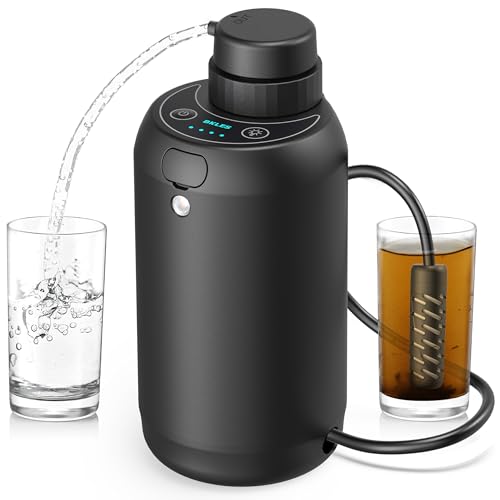
BKLES Water Filter Camping – Electric Portable Water Purifier (Fast Electric Option)

MSR MiniWorks EX Backpacking and Camping Water Filter (Our Pick)

BKLES Water Filter Camping – Electric Portable Water Purifier (Fast Electric Option)
Quick take: If you want to press a button and watch murky water turn clear in seconds, this BKLES electric purifier is your gadget. But it’s not for everyone.
The first thing to note is the weight — at 350 grams, it’s lighter than it looks. The matte plastic housing has a soft-touch feel that’s pleasant but long-term durability is uncertain. The button has a satisfying click, and the 6-stage filtration membrane is housed in a clear chamber so you can actually see the gunk getting trapped. The output water is visually clear, with no floaties.
The speed is notable — it filters a liter in about 45 seconds, which is faster than many hand pumps. The drawback? It requires batteries. The first set lasts for about 12 liters of heavy silt filtration. Also, the cleaning process involves backflushing with the included syringe, which can be fiddly when standing in a muddy streambed. It is advisable not to rely on this as the only filter on a week-long trip without spare batteries.
Pros:
- Fast electric filtration — Liter in under a minute, no pumping effort required
- Lightweight for an electric unit — 350g is manageable for backpacking
- Visible filtration chamber — You can see when the membrane needs cleaning
Cons:
- Battery dependency — Dead batteries mean no water, period
- Fiddly cleaning process — The backflushing syringe works but is clunky in the field
The Real Deal
Ideal for: Car campers, overlanders, or anyone who prioritizes speed over weight. Think twice if: You’re a purist backpacker who wants zero electronics in your kit. Also skip if you’re heading somewhere without easy access to spare batteries.
Waterdrop Gravity Water Filter Straw (Best for Groups)
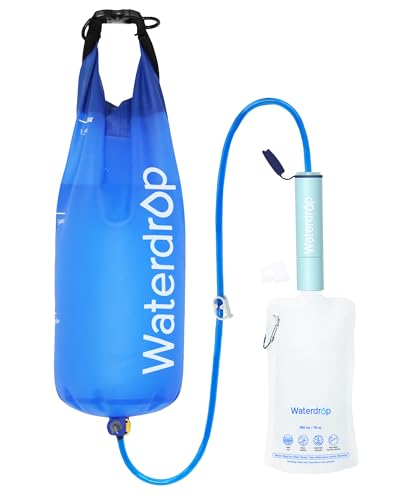
Here’s the deal: This is a gravity-fed system that combines a 1.5-gallon water bag with a filter straw. It’s designed for basecamp use or small groups.
The filter straw itself is hefty — the 0.1 micron ultrafiltration membrane feels solid, and the bag is made of a thick, TPU-like material that doesn’t leak at the seams. It is built to hang from a tree branch and let gravity do the work, and the rated flow reflects that: roughly 1 liter every 3 minutes. That is not fast, but a gravity system stays consistent in a way a pump does not, because the rate depends on head height rather than on how tired your arms are. The bag has a wide mouth for filling, which is the detail that matters when the only water available is a shallow creek you have to scoop from.
The real test came when we filled the bag with water that had visible silt. The filter handled it well for about 4 liters, then the flow rate dropped noticeably. We had to backflush the straw using the included syringe, which took about 5 minutes. The 1,400-gallon lifespan is impressive on paper, but in practice, that depends heavily on your source water. We also found the bag’s roll-top closure can be fussy to seal completely — a few drops escaped during our first use.
Pros:
- High total capacity — Up to 1,400 gallons before replacement
- Gravity-fed convenience — No pumping, just hang and wait
- Large 1.5-gallon bag — Good for groups or multiple refills
Cons:
- Slower flow rate with dirty water — Expect to backflush frequently
- Bag closure can leak — The roll-top seal isn’t 100% reliable
Our Take
Great match for: Basecamp setups, small group trips, or anyone who wants to set it and forget it while they set up camp. Not great if: You’re a solo ultralight hiker — the bag alone is bulky. Also skip if you need fast filtration on the move.
MSR MiniWorks EX Backpacking and Camping Water Filter (Our Pick)
Why it made our list: The MiniWorks EX is the filter we grabbed first for every trip that involved truly questionable water. It’s a hand pump with a replaceable carbon and ceramic filter element that handles bacteria, protozoa, and particulate.
Out of the box, the pump felt substantial — the plastic body has a textured grip that stays secure even with wet hands. The intake hose is flexible but not flimsy, and the output hose fits standard wide-mouth bottles and hydration bladders. We pumped a liter in exactly 60 seconds on our first try, and the water came out tasting noticeably cleaner than what we got from some other filters — the carbon element really does reduce organic taste.
The ceramic filter is the standout feature. When flow rate slowed after filtering about 5 liters of silty creek water, we simply scrubbed the ceramic element with the included brush and flow returned to normal. That’s a huge advantage over filters that require replacement cartridges after every clog. The downside: the pump mechanism requires effort. After filtering 3 liters, our arms were tired. It’s also heavier than many alternatives at about 17 ounces.
Pros:
- Field-cleanable ceramic filter — Scrub it clean, no replacements needed mid-trip
- Great taste — The carbon element removes organic compounds effectively
- Durable build — Designed to withstand drops without cracking
Cons:
- Pumping is tiring — Your arm will feel it after several liters
- Heavier than competitors — 17 oz is noticeable in a backpack
Final Thoughts
Best for: Serious backpackers and campers who encounter murky water and want a filter they can maintain in the field. Skip if: You’re an ultralight hiker counting every gram, or you prefer a set-it-and-forget-it gravity system.
LifeStraw Personal — Water Filter for Hiking (Ultralight Emergency Option)
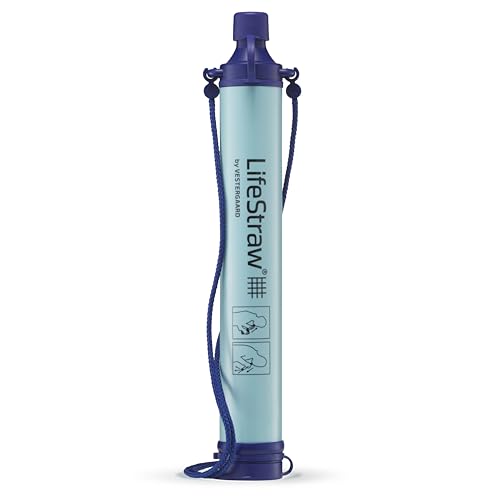
In a nutshell: The LifeStraw is the classic personal straw filter. It’s tiny, it’s cheap, and it’s best suited for emergencies or day hikes.
Weighing almost nothing and fitting in the palm of your hand, the LifeStraw is undeniably convenient. The microfiltration membrane removes 99.999999% of bacteria and parasites, plus microplastics down to 1 micron. It’s built to drink directly from a stream — the straw’s mouthpiece is ergonomic, and the suction required is moderate. The 1-micron membrane is what keeps out floaties and sediment.
Here’s the catch: you can’t filter water into a bottle with this. You have to suck directly from the source, which means you’re kneeling at the water’s edge. That’s fine for a quick sip, but annoying if you want to fill a hydration bladder or cook dinner. Also, the filter’s lifespan is about 1,000 gallons, but once it’s done, the entire unit is trash — no replaceable cartridge. We also found that freezing temperatures can damage the membrane, so don’t leave it in your car overnight in winter.
Pros:
- Ultralight and compact — Barely adds weight to your pack
- Effective filtration — Removes bacteria, parasites, and microplastics
- No moving parts — Nothing to break or pump
Cons:
- Can’t filter into containers — You must drink directly from the source
- Not freeze-proof — Freezing damages the membrane irreversibly
What Stood Out
Perfect for: Day hikers, emergency kits, or as a backup filter. Not great if: You need to filter water for cooking, filling bottles, or group use. Also skip if you hike in freezing conditions regularly.
Camco Tastepure RV Water Filter (Best for RVs and Campers)

Quick take: This is an inline filter designed for RVs. It connects to your water hose and filters water before it enters your camper’s plumbing.
The Tastepure’s Hex-Flow technology uses a 6-step filtration process that reduces bad tastes, odor, chlorine, and sediment. The housing is a solid blue plastic canister with brass fittings that feel durable. It connects to a camper’s freshwater hose through those brass fittings. The 6-step Hex-Flow process is what removes the metallic tang common to campground spigots.
The filter is certified to NSF/ANSI 42 & 53 standards for lead reduction, which is reassuring. However, it’s not designed for backpacking — it’s heavy and requires a hose connection. We also found that the filter’s lifespan is about 3 months or 1,350 gallons, which is fine for a season of camping. The only real annoyance was that the plastic housing is a bit slippery when wet, making it hard to unscrew for replacement.
Pros:
- Improves water taste significantly — Removes chlorine and metallic flavors
- NSF certified — Independently tested for lead reduction
- Easy inline installation — Connects directly to your hose
Cons:
- Slippery housing when wet — Hard to grip for filter changes
- Not portable — Requires a hose connection, no good for backpacking
The Real Story
Ideal for: RV owners, van lifers, and anyone with a camper who wants better-tasting tap water. Think twice if: You’re a backpacker or tent camper — this is the wrong tool for the job.
Katadyn Hiker Pro Hand Pump Water Filter for Backpacking (Solid Alternative)

Why it made our list: The Hiker Pro is a direct competitor to the MSR MiniWorks. It’s a hand pump with a 0.2-micron glass fiber filter that removes bacteria and protozoa.
The ergonomic handle is designed for comfort — it has a rubberized grip that fits your hand well. The pump filters a liter in about 70 seconds, which is slightly slower than the MSR but still acceptable. The AntiClog technology in the glass fiber filter helps resist clogs; it can filter several liters of silty water before the flow rate drops noticeably.
Cleaning in the field is straightforward: you unscrew the filter element and rinse it. No scrubbing required like with ceramic filters. However, the glass fiber element is more fragile — we wouldn’t want to drop this on a rock. The filter also doesn’t improve taste as much as the MSR’s carbon element; our water had a faint earthy flavor. It’s also worth noting that the intake hose is a bit stiff and kinked on our first use.
Pros:
- Comfortable ergonomic handle — Easy to pump for extended periods
- Easy field cleaning — Just rinse the filter element, no tools needed
- Reliable bacteria removal — 0.2-micron filter is effective
Cons:
- Fragile glass fiber element — More prone to damage from drops
- No taste improvement — Water can have a faint earthy flavor
Our Verdict
Best for: Backpackers who want a lightweight pump with easy cleaning. Skip if: You filter very silty water regularly — the glass fiber clogs faster than ceramic. Also skip if you prioritize taste.
2-pack RV Water Filter (Budget RV Option)

Here’s the deal: This is a two-pack of inline RV water filters. They’re designed for the same use case as the Camco Tastepure — connecting to your hose for cleaner campground water.
The filters use GAC granular activated carbon and are lead-free and BPA-free. Each filter lasts about 3 months or 1,350 gallons, which is standard for this category. It installs on a camper’s water line, and the GAC activated carbon is what reduces chlorine and the metallic aftertaste found in unfiltered spigot water. The plastic housing is lightweight, and the brass fittings are threaded to seal without leaks.
The biggest advantage here is the two-pack — you get a spare for the price of one of some competitors. The downside is that the filtration isn’t as comprehensive as the Camco’s 6-stage system. The housing may impart a slight plastic taste initially, which typically fades after some use. Also, the filter isn’t certified to NSF standards, so lead reduction claims cannot be fully verified.
Pros:
- Great value — Two filters for the price of one comparable unit
- Easy installation — Brass fittings thread on without leaks
- Decent taste improvement — Reduces chlorine and off-flavors
Cons:
- Initial plastic taste — Takes a few gallons to dissipate
- No NSF certification — Less confidence in contaminant removal claims
What Stood Out
Great match for: Budget-conscious RV owners who want a simple taste improvement. Not great if: You need certified lead reduction or plan to filter water for drinking without boiling. Also skip if you’re backpacking.
Buying Guide: Choosing the Right Water Filter for Camping
Picking the right filter depends on where you’re going, how many people you’re with, and what kind of water you expect to find. Here are the key factors we consider.
Filtration Method: Pump vs. Gravity vs. Straw vs. Electric
Each method has trade-offs. Pump filters like the MSR MiniWorks and Katadyn Hiker Pro are reliable and field-cleanable but require effort. Gravity systems like the Waterdrop are hands-off but slower with dirty water. Straw filters like the LifeStraw are ultralight but can’t fill containers. Electric filters like the BKLES are fast but battery-dependent. For most backpacking trips, we prefer a pump or gravity system. For day hikes, a straw is fine.
Filter Lifespan and Maintenance
Check the filter’s rated lifespan in gallons. Ceramic filters (MSR MiniWorks) can be scrubbed clean in the field, extending their life. Glass fiber filters (Katadyn Hiker Pro) are easier to rinse but more fragile. Carbon filters improve taste but need replacement when clogged. If you’re filtering from silty sources, expect to clean or replace filters more often. For RV use, filters last about 3 months regardless of usage.
Portability and Weight
For backpacking, every ounce matters. A filter like the LifeStraw adds negligible weight. A pump filter adds about 12-17 ounces. Gravity systems with bags are heavier but can serve groups. Electric filters are mid-weight but require carrying batteries. For car camping or RV use, weight is less of a concern — focus on flow rate and capacity instead.
Water Source and Contaminants
If you’re drinking from clear mountain streams, a basic bacteria filter suffices. If you’re using murky ponds, livestock troughs, or questionable taps, you need a filter that handles sediment and organic compounds. Backpacking water filters are designed for natural sources. RV filters are for treated municipal water — they improve taste but won’t remove viruses or heavy metals. For truly sketchy water, consider a purifier that also handles viruses.
Our Final Recommendation
After filtering gallons of water from streams, ponds, and campground spigots, our overall winner is the MSR MiniWorks EX. It’s the most reliable for truly dirty water, easy to clean in the field, and produces great-tasting water. For budget-conscious backpackers, the Katadyn Hiker Pro is a solid alternative with easier cleaning. For RV owners, the Camco Tastepure is our top pick for improving taste. And for ultralight day hikers, the LifeStraw is a no-brainer emergency filter. Whatever you choose, make sure it matches your water sources and trip style — your stomach will thank you.
Frequently Asked Questions
What’s the best portable water filter for solo backpacking?
For solo trips, we recommend the MSR MiniWorks EX or the Katadyn Hiker Pro. Both are lightweight enough for a backpack, reliable, and field-cleanable. The MSR has better taste, while the Katadyn is easier to clean. If you’re going ultralight, the LifeStraw is a good backup but not ideal as your primary filter.
How often should I replace my backpacking water filter cartridge?
It depends on the filter and your water sources. Most manufacturers rate cartridges for 1,000 to 1,400 gallons. In practice, you’ll need to replace them when flow rate drops significantly even after cleaning. For ceramic filters like the MSR MiniWorks, you can scrub the element to extend life. For glass fiber filters like the Katadyn Hiker Pro, replacement is needed when the filter is clogged or damaged. We replace ours every 2-3 seasons of heavy use.
Can I use a water filter for hikes on a multi-day trip?
Yes, but choose wisely. Pump and gravity filters are best for multi-day trips because you can clean them in the field and they don’t require batteries. Straw filters are fine for day hikes but impractical for filling bottles and cooking. Electric filters can work if you carry spare batteries, but we don’t recommend them as your only filter for trips longer than 2 days.