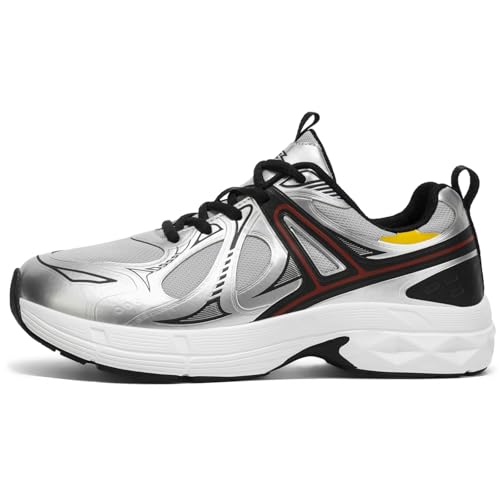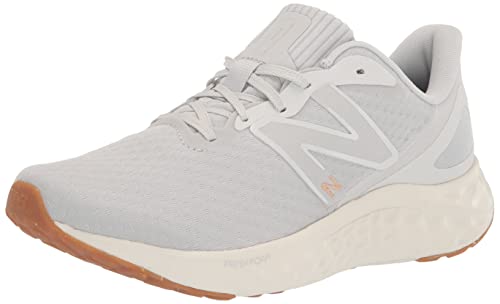
Running Shoe Store or Online Order: What Each Channel Actually Gives You
Contents
The honest answer to “where should I buy running shoes” is that the choice is not really between two shops. It is between two ways of ordering, and one of them — ordering by mail, via the Internet, or by telephone — is governed by a federal regulation. Walking into a running shoe store puts the shoe on the foot before any money moves. Ordering the same shoe remotely brings the order inside a federal regulation: a dated set of duties on the seller covering when the box has to leave, what happens if it does not, and how quickly the money comes back.
That trade is the whole decision. The clock lives in Part 435 of title 16 of the Code of Federal Regulations, headed “Mail, Internet, or Telephone Order Merchandise”, issued under 15 U.S.C. 57a with a source note giving its Federal Register origin as 79 FR 55619, Sept. 17, 2014. It applies according to how an order was placed rather than what was ordered, and its exclusions cover subscriptions ordered for serial delivery after the initial shipment is made in compliance with the part, orders of seeds and growing plants, and orders made on a collect-on-delivery basis.
Key takeaways
- 16 CFR Part 435 defines what it covers by how the order was placed — “by mail, via the Internet, or by telephone” — not by the product.
- Where a solicitation states no shipping time, section 435.2(a)(1)(ii) sets a default of thirty (30) days after receipt of a properly completed order, extended to fifty (50) days where credit is applied for.
- A seller that cannot meet the date must offer, “clearly and conspicuously and without prior demand,” a choice between consenting to a delay or cancelling — with a definite revised shipping date.
- Section 435.1(b) defines a prompt refund as one sent by a means at least as fast and reliable as first class mail within seven (7) working days, or one (1) billing cycle for a credit sale.
- The three-business-day cooling-off rule, 16 CFR Part 429, excludes a sale “made pursuant to prior negotiations in the course of a visit by the buyer to a retail business establishment having a fixed permanent location.”
The keyword is a channel question, not a shoe question
The question behind “running shoe store” is usually where to buy, not whether to. What is still open is where the transaction happens, and the model on the wall and the model in the browser tab are the same object. What differs is everything wrapped around it: whether it can be tried on before payment, and who has to move first when something goes wrong. One side of that comparison is set out in regulation, which makes it the checkable half.
What the regulation requires before a seller takes the order
Part 435 begins before the order is even accepted. Section 435.2(a)(1) is framed as a prohibition on soliciting an order at all — “to solicit any order for the sale of merchandise to be ordered by the buyer through the mail, via the Internet, or by telephone” — unless the conditions that follow are met. At that moment the seller must already have “a reasonable basis to expect that it will be able to ship any ordered merchandise to the buyer.”
Then the deadline. Where the solicitation states a shipping time, section 435.2(a)(1)(i) requires it to be “clearly and conspicuously stated,” and that time becomes the deadline. Where nothing is stated, section 435.2(a)(1)(ii) supplies the default: “within thirty (30) days after receipt of a properly completed order from the buyer.” The same provision extends that window where credit is applied for to pay for the merchandise, giving the seller “fifty (50) days, rather than thirty (30) days, to perform the actions.”
Two definitions decide whether the window has been met. Section 435.1(c) fixes the starting point as “the time at which the seller receives both said payment and an order from the buyer containing all information needed.” Section 435.1(e) defines shipment as “the act by which the merchandise is physically placed in the possession of the carrier,” so the deadline is satisfied at dispatch, and delivery to the door sits outside that timetable.
| Stage of a remote order | Provision | What the text requires |
|---|---|---|
| Scope of the rule | 435.1(a) | Sales ordered “by mail, via the Internet, or by telephone” |
| Before soliciting | 435.2(a)(1) | “A reasonable basis to expect that it will be able to ship” |
| Stated shipping time | 435.2(a)(1)(i) | The time “clearly and conspicuously stated” becomes the deadline |
| No time stated | 435.2(a)(1)(ii) | Thirty (30) days; fifty (50) days where credit is applied for |
| Clock starts | 435.1(c) | Both payment and an order “containing all information needed” |
| Deadline met by | 435.1(e) | Merchandise “physically placed in the possession of the carrier” |
| Delay notice | 435.2(b)(1) | Option to consent or cancel, offered “without prior demand” |
| Refund speed | 435.1(b) | Seven (7) working days; one (1) billing cycle for credit |
When the box does not leave on time
The seller has to move first. Under section 435.2(b)(1), a seller that cannot ship within the applicable period must offer the buyer, “clearly and conspicuously and without prior demand, an option either to consent to a delay in shipping or to cancel the buyer’s order and receive a prompt refund.” The words “without prior demand” carry the weight: the buyer does not have to chase it. Section 435.2(b)(3) makes it a violation to “fail to furnish the buyer with adequate means, at the seller’s expense, to exercise such option.”
The notice has to say something concrete: section 435.2(b)(1)(i) requires the seller to “provide a definite revised shipping date.” From there the default cuts in two directions. For a delay of thirty days or less, section 435.2(b)(1)(ii) provides that unless the seller receives, before shipment and before the revised date expires, “a response from the buyer rejecting the delay and cancelling the order, the buyer will be deemed to have consented.” For longer delays, section 435.2(b)(1)(iii) flips it: absent a response, “the buyer will be deemed to have rejected any further delay, and to have cancelled the order.”
What a refund has to look like
Speed is defined, not left to the seller. Section 435.2(c) makes it a violation “to fail to deem an order cancelled and to make a prompt refund to the buyer” in the circumstances it lists. Section 435.1(b)(1) puts a number on it: a refund sent “by any means at least as fast and reliable as first class mail within seven (7) working days.” For a credit sale, section 435.1(b)(2) sets one billing cycle. Under section 435.2(d), a seller’s failure “to have records or other documentary proof establishing its use of systems” that comply counts against it.
One caution on currency. The wording quoted here comes from the 2024 annual edition of the Code of Federal Regulations as published on govinfo.gov. Regulations are amended, so anyone relying on a deadline in a live dispute should confirm it against the current edition.
What the counter gives, and what it does not
The shop’s advantage is physical and immediate. The shoe is tried on before payment, and the question of size is settled before the transaction rather than after it. For a first pair, that is what the trip to the counter is buying.
What the counter does not carry is the federal three-business-day cooling-off right. The three-business-day cooling-off right sits in 16 CFR Part 429, headed “Rule Concerning Cooling-Off Period for Sales Made at Homes or at Certain Other Locations.” It turns on where the buyer agreed to buy, covering cases where “the buyer’s agreement or offer to purchase is made at a place other than the place of business of the seller.” Where it applies, the wording reads: “You, the buyer, may cancel this transaction at any time prior to midnight of the third business day after the date of this transaction.” Part 429 then excludes a sale “made pursuant to prior negotiations in the course of a visit by the buyer to a retail business establishment having a fixed permanent location,” so a walk-in purchase carries no federal three-day cancellation right.
Reading the policy, then matching channel to purchase
On a first pair, the written return policy is the specification that matters most. A shoe that feels correct in the shop can feel different once it is used, and what happens next depends on what the store has committed to in writing: how long the window runs, whether it survives outdoor use, and whether the outcome is money back or credit. Read it before paying rather than after.
From there the choice sorts itself. An unfamiliar model, a first pair, or a foot between sizes points toward the counter, where the trial happens before the money moves. A repeat purchase of a model already worn points toward a remote order, where the regulation supplies a timetable and a defined refund speed and the risk is logistics rather than fit.
Pro tip
When ordering remotely, treat the seller’s stated shipping time as the operative deadline, because section 435.2(a)(1)(i) makes a clearly and conspicuously stated time the one the seller is held to. Where none is stated, the thirty-day default under section 435.2(a)(1)(ii) runs from receipt of a properly completed order — so keep the confirmation showing when payment and a complete order actually landed.
Common mistake
Deleting the delay email. For a delay of thirty days or less, section 435.2(b)(1)(ii) provides that a buyer who does not respond before shipment and before the revised date expires “will be deemed to have consented” to the new date. Silence is treated as agreement in that window, so a buyer who wants the refund instead has to say so.
Frequently asked questions
Does federal regulation set a deadline for shipping an online shoe order?
Yes. Under section 435.2(a)(1)(i) of 16 CFR Part 435, a shipping time “clearly and conspicuously stated” in the solicitation becomes the deadline. Where none is stated, section 435.2(a)(1)(ii) applies a default of thirty days after a properly completed order, or fifty where credit is applied for.
When does that shipping clock actually start?
Not at the moment of clicking. Section 435.1(c) defines the starting point as the time the seller receives both the payment and an order “containing all information needed.”
Is the deadline met at dispatch or at delivery?
At dispatch. Section 435.1(e) defines shipment as “the act by which the merchandise is physically placed in the possession of the carrier,” so transit time after that point sits outside the regulation’s timetable.
What must a seller do if an order will be late?
Section 435.2(b)(1) requires an offer, “clearly and conspicuously and without prior demand,” of the option to consent to a delay or to cancel for a prompt refund, with a definite revised shipping date. Under section 435.2(b)(3), the means of replying must be furnished at the seller’s expense.
How quickly does a refund have to be sent?
Section 435.1(b)(1) defines a prompt refund as one sent by any means at least as fast and reliable as first class mail within seven working days, and section 435.1(b)(2) sets one billing cycle for a credit sale.
Is there a three-day right to cancel a purchase made in a shop?
Not under the federal cooling-off rule. Part 429 covers sales where the buyer’s agreement to purchase is made away from the seller’s place of business, and it excludes a sale made “in the course of a visit by the buyer to a retail business establishment having a fixed permanent location.” Section 435.3(b) does preserve stronger state and local protections.