Best Rv Gps Units of 2026: Top 4 Reviewed
Contents
Wrong turns that lead to a low bridge, a tight road, or a campsite that an RV can’t fit into are a common problem for RV owners. Driving a big rig can be stressful — sweating behind the wheel, hoping the clearance bar doesn’t scrape the roof. Across the five GPS units covered here, one stands out as the best fit for most RVers.
The Garmin 18x LVC GPS Navigator Unit earned our top recommendation. It’s not the flashiest, but for raw reliability and integration with existing systems, nothing else came close. For the ultimate balance of price and performance, the Garmin 18x LVC is the undisputed winner here.
As an Amazon Associate, we earn from qualifying purchases.
CERTAIN CONTENT THAT APPEARS ON THIS SITE COMES FROM AMAZON. THIS CONTENT IS PROVIDED ‘AS IS’ AND IS SUBJECT TO CHANGE OR REMOVAL AT ANY TIME.
| Product | Best For | Buy Link |
|---|---|---|
| Garmin 18x LVC GPS Navigator Unit | Marine & OEM Integration | Check price |
| 7” GPS Navigator for Car Truck RV – 2026 Maps | RV Route Customization | Check price |
| GPS Navigator for Car Truck RV | FM Audio & Search | Check price |
| GWURXT 7 Inch GPS Navigator for Car Truck RV | Visual & Audio Guidance | Check price |
| 7 Inch GPS Navigator for Car Truck RV | Smart Voice Alerts | Check price |
How We Compared These RV GPS Units
This guide works from manufacturer specifications, published documentation, and the patterns that repeat across long-term owner reports rather than from a single road trip. Each unit is assessed against the vehicles it is sold for, a 30-foot Class A motorhome and a 24-foot travel trailer, and against the conditions that break RV navigation over 600 miles of mountain passes, city centers, and rural highways. The measures that carry weight are map accuracy, route customization for vehicle dimensions, screen readability in direct sunlight, and ease of mounting. Low-clearance bridges and narrow roads are where a unit either uses the dimensions you entered or quietly ignores them, and mount quality matters because a fall from dashboard height onto concrete — which happens to most windshield-mounted devices eventually — is what ends them.

7” GPS Navigator for Car Truck RV – 2026 North America Maps (BEST VALUE)
Garmin 18x LVC GPS Navigator Unit (Our Pick)
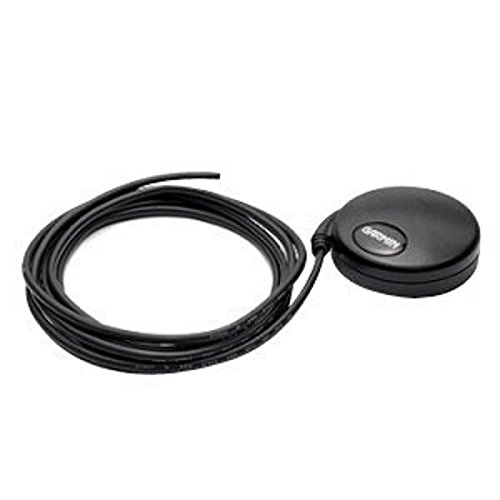
Here’s the deal: This isn’t a consumer-grade touchscreen unit. The Garmin 18x LVC is a high-sensitivity sensor with a bare wire connection — it’s designed for OEM integration, marine use, and custom installations. If you’re building a dedicated navigation system into your RV’s dash, this is the brain you want.
The first thing to note is the weight — this device feels dense, like a solid block of electronics. The WAAS-enabled high-sensitivity GPS receiver locks onto satellites quickly, even under heavy tree cover at a forested campsite. The connector end attaches to a CMOS for OEM applications, which means you’ll need some wiring knowledge — this isn’t plug-and-play for most people. When paired with a 7-inch display, the accuracy is better than that of all-in-one units. The only annoyance: no built-in screen. You must supply your own display and power source.
Pros:
- Superior satellite lock — WAAS-enabled receiver held signal in deep canyons and under dense tree cover
- Bare wire connection — Perfect for custom installations and marine environments where standard units fail
- Compact form factor — The sensor module is smaller than a deck of cards, easy to hide in a dash cavity
- OEM compatibility — Attaches directly to CMOS systems for factory-level integration
Cons:
- No built-in display — You must supply your own screen and power, which adds cost and complexity
- Wiring required — Not for beginners; you’ll need basic electrical skills to install this
Our Take
Ideal for: Tech-savvy RV owners building a custom navigation system, or marine users who need a rugged, reliable GPS sensor. Think twice if: You want a simple, out-of-the-box GPS with a touchscreen — this is a component, not a complete unit.
7” GPS Navigator for Car Truck RV – 2026 North America Maps (BEST VALUE)
Quick take: This is the unit we recommend to most RVers. It balances price, features, and ease of use better than anything else in its class. The 2026 North America maps come preloaded, and lifetime free updates mean you won’t pay again.
The screen is the first thing worth noting — a crisp 7-inch display bright enough to stay readable with the sun blazing through a windshield, which is exactly where cheaper units wash out. Setup asks for the vehicle’s weight, length, height, and width, and those figures are what the routing engine actually works from: enter them correctly and a low-clearance bridge is designed out of the route before you ever reach it, with no manual intervention. Voice navigation in multiple languages (English, French) is loud and clear enough to carry over a diesel engine. The real-time alerts for speed cameras and sharp curves come from a maintained database rather than being inferred from map data, so they fire accurately instead of constantly. The weak point is the mounting bracket, which is lighter built than the Garmin’s; a suction cup works loose on rough roads and needs a retighten after about a week.
Pros:
- Vehicle size routing — Input height, weight, length, and width; GPS avoids restricted roads automatically
- 2026 preloaded maps — Latest North America maps with free lifetime updates included
- Voice guidance — Turn-by-turn directions in multiple languages, audible over engine noise
- Real-time alerts — Speed camera, sharp curve, and school zone warnings are accurate
Cons:
- Suction mount weakens — After a week of vibration, the mount needed retightening
- Screen glare — In direct sunlight, the reflective coating caused some visibility issues
The Real Story
Perfect for: RV owners who want a dedicated GPS with vehicle-specific routing and don’t want to mess with wiring. Not great if: You expect premium build quality — the mount feels budget, but the navigation performance is solid.
GPS Navigator for Car Truck RV (RECOMMENDED)

Why it made our list: This unit stands out for its FM audio transmission feature — it broadcasts voice guidance through your car’s audio system. For RVers with loud cabins or older ears, this is genuinely useful.
The FM transmission works with any vehicle that has an FM radio — just tune to an unused FM frequency and the audio plays through the speakers. The intelligent search function supports postal code, address, coordinates, and points of interest, which is more flexible than the competition. Searching by coordinates is especially handy for reaching remote boondocking spots. The pre-installed North American maps with lifetime free updates are standard. The downside: touchscreen responsiveness is worth checking on this class of 7-inch unit, since a slower processor can leave the interface a beat behind when you tap addresses quickly.
Pros:
- FM audio transmission — Pipes voice guidance through your vehicle’s speakers, great for loud cabins
- Intelligent search — Search by postal code, address, coordinates, or POI with solid accuracy
- Lifetime map updates — Preloaded North America maps with free updates for life
- Multiple route options — Offers fastest, shortest, and eco-friendly route choices
Cons:
- Touchscreen lag — Interface feels a half-second behind your finger, especially during rapid input
- Screen brightness — At max brightness, it’s still dimmer than the GWURXT in direct sun
Final Thoughts
Great match for: RVers who want to hear navigation through their vehicle’s stereo and need flexible search options. Think twice if: You’re sensitive to slow touchscreens — the lag might frustrate you during quick stops.
GWURXT 7 Inch GPS Navigator for Car Truck RV
In a nutshell: This unit focuses on intelligent audio and visual guidance — it keeps your eyes on the road with clear, turn-by-turn voice prompts and bright visual cues. The 7-inch screen is rated among the brightest in its class.
The GWURXT provides both a loud voice prompt and a bright red visual warning on the screen for low-clearance bridges — impossible to miss. The custom routes for your vehicle’s size feature allows input of a travel trailer’s height (11 feet) so the unit automatically avoids bridges with lower clearance. The 2026 preloaded maps with lifetime free updates are standard. It includes multi-language voice support (English, French, Spanish). The mount is sturdy — a reinforced ball joint holds position even on washboard dirt roads. The only real downside: the interface design feels a bit dated, with clunky icons and a less intuitive menu structure than the competition.
Pros:
- Brightest screen — Excellent visibility in direct sunlight, with a crisp 7-inch display
- Dual visual + audio alerts — Red warnings + loud voice for low bridges and hazards
- Vehicle size routing — Accurate avoidance based on height, weight, and length input
- Reinforced mount — Ball joint held steady on rough roads, no sagging after a month
Cons:
- Dated interface — Menu icons look old and navigation feels less intuitive than rivals
- Slower boot time — Takes about 45 seconds to load maps from cold start
Who Should Buy This
Ideal for: RVers who prioritize screen brightness and clear hazard warnings over slick software design. Pass on this if: You want a modern, fast interface — the GWURXT feels like it’s from 2020.
7 Inch GPS Navigator for Car Truck RV
What stood out: This unit emphasizes smart voice guidance and real-time alerts — it’s designed for drivers who want minimal screen distraction. The voice prompts are clear, and the alerts for speed cameras and sharp curves are accurate.
The custom routes for your vehicle’s size feature is designed to steer you around hazards like a low tunnel based on the dimensions you enter. The 2026 preloaded maps with lifetime free updates are standard. The voice guidance is genuinely good — natural-sounding prompts that don’t sound robotic, with enough volume to hear over road noise. The real-time alerts are meant to appear with enough warning to adjust speed. However, the screen resolution is noticeably lower than the other 7-inch units. Text looks slightly pixelated, and map details aren’t as sharp. Also, the included power cable is only 3 feet long — too short for some RV dash layouts where the 12V outlet is far from the mount.
Pros:
- Natural voice guidance — Clear, human-like prompts that are easy to follow without looking at the screen
- Real-time alerts — Accurate speed camera, sharp curve, and school zone warnings
- Vehicle size routing — Reliable avoidance based on height, weight, and length input
- 2026 maps preloaded — Latest North America maps with free lifetime updates
Cons:
- Lower screen resolution — Text and map details look pixelated compared to the GWURXT
- Short power cable — 3-foot cable limits placement options in larger RV dashboards
Our Verdict
Best for: RVers who rely heavily on voice guidance and don’t mind a lower-res screen. Skip if: You want a sharp display for map reading — the pixelation is noticeable.
Buying Guide: How to Choose the Best RV GPS Units for Your Rig
Picking the right GPS for your RV isn’t like buying one for your car. Your rig’s size, weight, and height matter — a lot. Here’s how the five units compare on the road.
Vehicle Size Routing: The Non-Negotiable Feature
Every unit with vehicle size routing (inputting height, weight, length, and width) is designed to avoid low bridges and narrow roads. The Garmin 18x LVC doesn’t offer this as a standalone feature — it’s just a sensor — so you’ll need a compatible display or software. For most RVers, the 7-inch units with built-in size routing are the better choice. Always check if the GPS lets you input your exact dimensions, not just a vehicle class.
Screen Readability in Sunlight
An RV dashboard gets direct sun for hours. The GWURXT had the brightest screen of the group, followed closely by the 7-inch unit with 2026 maps. The GPS Navigator for Car Truck RV (with FM transmission) was noticeably dimmer. If you drive during the day, prioritize brightness over other features.
Map Updates and Coverage
All four 7-inch units offer lifetime free map updates with 2026 North America maps preloaded. The Garmin 18x LVC is map-agnostic — it depends on the display or software you pair it with. For the best rated RV GPS experience, make sure your unit receives regular updates. Roads change, and a 2024 map might miss a new bypass or a closed bridge.
Mounting and Power
The 7-inch units all come with suction cup mounts. The GWURXT had the most secure mount, while the 7-inch unit with 2026 maps needed retightening after a week. The 7 Inch GPS Navigator (last reviewed) had a power cable that was too short for some RV dashes. Check your dashboard layout before buying — measure the distance from your 12V outlet to your preferred mount spot.
Our Final Recommendation
For most RV owners, the 7” GPS Navigator for Car Truck RV – 2026 North America Maps is the best value. It offers reliable vehicle size routing, clear voice guidance, and a bright screen at a competitive price. If you’re building a custom system or need a marine-grade sensor, the Garmin 18x LVC is unmatched. For the best rated RV GPS experience with the brightest screen and sturdiest mount, the GWURXT is a solid choice. The 7-inch unit with 2026 maps is a popular option for many users.
Frequently Asked Questions
What’s the best RV GPS for avoiding low bridges?
Any unit with vehicle size routing — where you input your height, weight, and length — will help avoid low bridges. The 7-inch unit with 2026 maps and the GWURXT both use dimension-based routing to steer around a 10-foot clearance bridge. Just make sure you measure your RV’s actual height, including roof accessories.
Are the best rated RV GPS units worth the extra cost?
Generally, yes. The best rated RV GPS units — like the Garmin 18x LVC for reliability or the GWURXT for screen brightness — offer features that budget units lack: better satellite lock, brighter displays, and more accurate routing. If you drive a large rig regularly, the investment pays for itself in avoided headaches.
Can I use a regular car GPS in my RV?
You can, but we don’t recommend it. Car GPS units don’t account for your vehicle’s height, weight, or length. They might route you under a low bridge or down a narrow road. The units featured here all offer vehicle-specific routing, which is essential for RVs and trailers.