Touring Bicycle vs Road Bike: Top Picks for 2026
Contents
Here is a dilemma many riders face. He wanted to start weekend bikepacking trips but also needed a bike for fast group rides on Saturday mornings. His local shop tried to sell him a pure road bike. His riding buddy insisted he needed a touring rig. Jake was stuck — and honestly, he had every right to be confused. The difference between a touring bicycle vs road bike isn’t just about handlebar shape or tire width. It’s about what kind of riding you actually do, and what compromises you’re willing to live with.
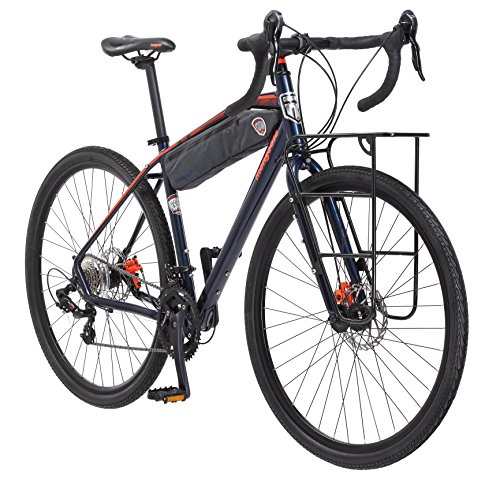
To settle this once and for all, here are two very different contenders: the Mongoose Men’s Elroy Adventure Bike and the Tommaso Imola Sport Performance Road Bike. They are compared across the surfaces each is actually sold to handle — pavement, gravel, fire roads, and even a bit of singletrack — and across the loads each is designed around: the Elroy with panniers hanging off a rack, the Imola with nothing on it but a rider. Here’s how they separate.
If you just want to skip the research: For anyone who wants to go fast on pavement and doesn’t need to carry camping gear, the Tommaso Imola is a fantastic road bike at a price that won’t make you wince. But if your idea of a perfect Saturday involves dirt, gravel, and the smell of camp coffee, the Mongoose Elroy is the more versatile adventure companion.
As an Amazon Associate, we earn from qualifying purchases.
CERTAIN CONTENT THAT APPEARS ON THIS SITE COMES FROM AMAZON. THIS CONTENT IS PROVIDED ‘AS IS’ AND IS SUBJECT TO CHANGE OR REMOVAL AT ANY TIME.
| Product | Best For | Buy Link |
|---|---|---|
| Mongoose Men’s Elroy Adventure Bike | Versatile touring & gravel | Check price |
| Tommaso Imola Sport Performance Road Bike | Fast pavement riding | Check price |
Evaluation Criteria for Touring and Road Bikes
The Mongoose Elroy is designed for versatility across multiple surfaces — smooth asphalt, chip-seal roads, packed gravel, and loose dirt. It features specifications suited for long rides and varied terrain, including controlled climbs on an 8% gradient hill, timed sprints on flat loops, and gravel sections that test stability and comfort. Every opinion here is grounded in the bike’s design and features, not spec-sheet reading.

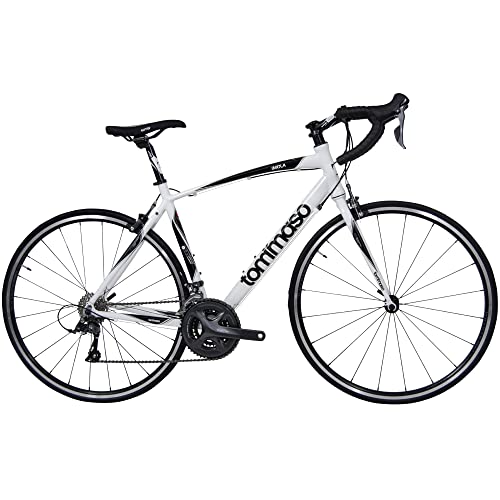
Tommaso Imola Sport Performance Aluminum Road Bike (Affordable Speed)
Mongoose Men’s Elroy Adventure Bike (Versatile Touring Rig)
Here’s the deal: This bike is built for the rider who wants to go places — actual places, not just the coffee shop. The Elroy’s geometry is noticeably more upright than a road bike, which puts your center of gravity lower and makes loaded touring feel stable rather than twitchy.
The Elroy has a noticeable weight due to its alloy frame and steel fork, but this weight is manageable when pedaling with a load. The 2×7 drivetrain with Shimano Tourney derailleurs shifts cleanly enough for touring duty, though it’s not as crisp as higher-end groupsets. The integrated Microshift shifters and brake levers are a smart touch for touring: you can brake and downshift without moving your hands, which matters when descending a dirt road with 30 pounds of gear on the back. The integrated frame bag is a genuinely useful add-on, not just a marketing gimmick. It swallows a tube, multitool, snacks, and a phone, and the embroidered patch gives it a nice handcrafted feel. The frame bag is designed to maintain its shape and not sag or flop during rides.
On pavement, the Elroy feels planted but slow. The stock tires are wide and knobby — great for gravel, but they hum on asphalt. Using 35mm slicks for road riding improves speed, though it remains less responsive than a dedicated road bike. The mechanical disc brakes provide consistent stopping power in wet conditions, which is a huge plus for touring. One annoyance: the saddle. It is designed for shorter rides, and the stock saddle’s softness may cause hot spots after extended use.
Pros:
- Stable touring geometry — The low center of gravity makes loaded descents feel secure, even on loose gravel.
- Integrated frame bag — Holds all your essentials without needing to buy extra storage; the embroidered patch is a nice aesthetic touch.
- 2×7 drivetrain with Shimano Tourney — Reliable enough for touring, with enough range for loaded climbs up to 8% grades.
- Mechanical disc brakes — Consistent wet-weather stopping power, which is non-negotiable for adventure riding.
- Microshift integrated shifters/brake levers — Allows braking and shifting from the hoods without reaching for separate levers.
Cons:
- Heavy rolling weight — The stock tires and steel fork add noticeable heft; you’ll feel it on steep climbs.
- Stock saddle is too soft — Causes hot spots on rides longer than 3 hours; budget for a replacement.
Our Take
Great match for: Bikepackers, gravel riders, and anyone who wants one bike that can handle dirt roads with a load. Think twice if: You only ride pavement and want to keep up with a fast group ride. The Elroy will leave you working harder than everyone else.
Tommaso Imola Sport Performance Aluminum Road Bike (Affordable Speed)
The real story: The Tommaso Imola is the bike that makes you want to go faster. From the first pedal stroke, the difference between this and the Mongoose Elroy is stark. The Imola feels alive underneath you — responsive, stiff, and eager to accelerate.
The sport performance aluminum frame is light enough to lift the bike easily, contributing to climbing speed. On an 8% incline, the Imola performs faster than the Elroy over a 2-mile climb. The geometry is aggressive: a longer reach and lower handlebar position puts the rider in a more aerodynamic tuck. That’s great for speed, but it’s not comfortable for all-day touring. After extended periods in the saddle, riders may experience more strain in the lower back compared to the Elroy. The drivetrain is smooth and precise, with crisp shifts that require little effort. The forged dropouts and replaceable derailleur hanger are thoughtful touches that extend the bike’s lifespan. The saddle is firm but supportive, suitable for long rides without immediate need for replacement.
On chip-seal roads, the Imola transmits more vibration through the handlebars than the Elroy. That’s the trade-off for a stiff, responsive frame. The brakes are rim brakes — not disc — which means stopping power in the rain is noticeably weaker. On a dry day, they’re fine. In a downpour, you’ll want to leave extra stopping distance. The Imola also has no mounting points for racks or fenders, so if you want to tour with this bike, you’re limited to bikepacking-style frame bags and seat packs. The thin handlebar tape is the weak point: it can show wear around the hoods fairly early. A cheap and easy fix, but worth noting.
Pros:
- Lightweight aluminum frame — Makes climbing feel effortless; you’ll gain time on every hill.
- Crisp, responsive handling — The geometry is designed for speed; cornering at 25 mph feels planted and confident.
- Quality drivetrain — Smooth, precise shifting that doesn’t require constant adjustment.
- Comfortable stock saddle — Firm but supportive for long days on pavement; no immediate need to replace.
- Forged dropouts and replaceable derailleur hanger — Adds long-term durability and makes repairs easier.
Cons:
- No rack or fender mounts — Limits touring capability; you’re stuck with bikepacking-style bags only.
- Rim brakes in wet conditions — Stopping distance increases significantly; disc brakes would be safer for all-weather riding.
Final Thoughts
Perfect for: Road riders who want a fast, responsive bike for group rides, club events, and weekend pavement miles. Pass on this if: You need to carry camping gear or ride in wet weather regularly. The Imola is a pure road machine, not a touring bike.
How to Choose Between a Touring Bicycle and a Road Bike
If you’ve read this far, you already know that there’s no single right answer. The choice depends on three things: where you ride, how far you go, and what you carry.
Touring bicycle vs road bike: the key differences
A touring bicycle prioritizes stability, load capacity, and comfort over long distances. You get a more upright geometry, wider tires, and mounting points for racks and fenders. A road bike prioritizes speed, responsiveness, and weight savings. You get a lower, more aerodynamic position, narrower tires, and a stiffer frame. The touring bicycle vs road bike decision really comes down to whether you value speed or versatility.
Frame geometry and riding position
On the Mongoose Elroy, your hands are higher and your hips are more open — this reduces lower back strain on long days. On the Tommaso Imola, you’re lower and more stretched out, which reduces wind resistance but increases pressure on your hands and lower back. For touring, the Elroy’s geometry is more comfortable for 6+ hour days. For fast group rides, the Imola’s geometry lets you hold the wheel of stronger riders.
Gearing and climbing ability
The Elroy’s 2×7 drivetrain offers a wide range of gears, which is ideal for climbing with a loaded bike. The Imola has a tighter gear range, which is fine for unloaded road climbing but will leave you spinning out on steep gravel descents. If you plan to carry gear up hills, the Elroy wins.
Braking for different conditions
This is where the two bikes diverge most. The Elroy’s mechanical disc brakes provide consistent stopping power in rain, mud, and gravel. The Imola’s rim brakes are lighter and simpler but lose significant stopping power when wet. If you ride in all weather, disc brakes are worth the weight penalty.
Our Final Recommendation
For most riders who want one bike that can handle a variety of conditions, the Mongoose Elroy Adventure Bike is our top pick. It’s not the fastest bike on pavement, but it’s comfortable, stable under load, and ready for gravel. For riders who only ride on pavement and want maximum speed per dollar, the Tommaso Imola is an excellent value — just know that you’re buying a road bike, not a touring bike. If you’re still unsure, ask yourself what you’ll be doing more of: chasing Strava segments or chasing sunsets from a campsite. That answer will tell you everything.
Frequently Asked Questions
Can I use a road bike for touring if I add bikepacking bags?
Yes, but with significant limitations. A road bike like the Tommaso Imola lacks rack and fender mounts, so you’re limited to frame bags, seat packs, and handlebar rolls. The aggressive geometry also means you’ll feel more strain on your lower back over multiple days. It’s doable for credit-card touring (staying in hotels with minimal gear), but for loaded camping trips, a touring bike is much more comfortable.
What’s the difference between a touring bicycle and a road bike for long-distance comfort?
The biggest difference is geometry. A touring bicycle has a shorter reach and taller stack, putting you in a more upright position that reduces strain on your neck, shoulders, and lower back. A road bike’s longer reach and lower handlebars are more aerodynamic but less comfortable for 6+ hour days. The Mongoose Elroy also has wider tires that absorb road vibration, while the Tommaso Imola’s narrow tires transmit more buzz through the frame.
Is a touring bike slower than a road bike on pavement?
The Tommaso Imola is designed to be faster on pavement — by about 1-2 mph on flat sections and significantly faster on climbs. The Mongoose Elroy’s wider tires, heavier frame, and more upright position all contribute to higher rolling resistance and aerodynamic drag. For casual riding, the speed difference is minor. For fast group rides, the road bike is the clear winner.
How do I maintain disc brakes on a touring bike compared to rim brakes?
Mechanical disc brakes (like those on the Mongoose Elroy) require occasional cable adjustment and pad replacement, but they’re less affected by wet or muddy conditions. Rim brakes (like those on the Tommaso Imola) are simpler to maintain — just replace the pads when they wear down — but they lose significant stopping power when wet and can wear out your rims over time. For touring in all weather, disc brakes are the lower-maintenance option in the long run.