Paragliding Training: The Complete Beginner Guide
Contents
Paragliding looks simple from the ground. A pilot runs off a hill, the wing inflates, and they float away. But beneath that graceful descent lies a sport that demands real skill. Skip the proper paragliding training, and you’re not just missing out on technique — you’re gambling with your safety. The flights that make the best stories are almost always the ones where something went wrong, which is an argument for training rather than against it. Preparation doesn’t prevent adventure — it just gives you better options when it shows up. The same applies here. Good training doesn’t kill the thrill; it makes sure you survive to tell the tale.
Key Takeaways
- Paragliding training typically takes 7 to 14 days to earn a beginner certification, not a weekend.
- You’ll learn ground handling, launching, landing, and emergency maneuvers before any solo flight.
- Choosing a certified school with modern gear and good wind conditions is the single most important decision you’ll make.
Understanding Paragliding Training
Before you sign up, understand what paragliding training actually involves. This isn’t a recreational pastime you can pick up in an afternoon. It’s a structured process that teaches you aerodynamics, weather reading, and emergency procedures. The goal is to make flying second nature so you react correctly when something unexpected happens.
Training breaks down into a few distinct phases. You start on flat ground, learning to control the wing. Then you move to gentle slopes for short hops. Finally, you progress to higher launches and longer flights. Each phase builds on the last, and skipping steps leads to bad habits or worse.
Ground Handling: The Foundation
Ground handling is the most overlooked part of paragliding training. You’ll spend hours on a flat field, inflating the wing and keeping it overhead. This teaches you how the wing responds to brake inputs and body movements. Without solid ground handling, your launches will be sloppy and your landings unpredictable.
Expect to practice in winds between 5 and 12 mph. Too light, and the wing won’t inflate properly. Too strong, and you risk being dragged. Your instructor will position you upwind and have you run forward while the wing rises. The key is to keep it centered — any drift means you’re not controlling it yet.
Slope Soaring and Short Flights
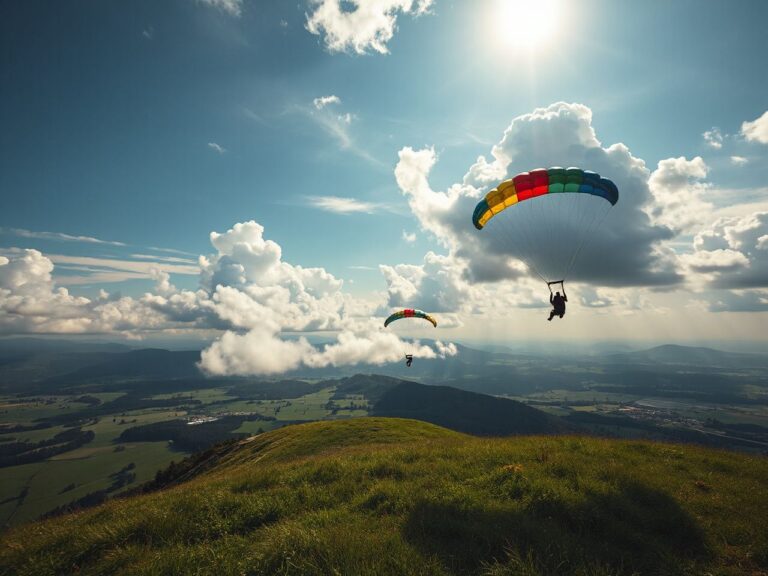
Once ground handling clicks, you move to a training hill. These are gentle slopes with an elevation change of 50 to 200 feet. You’ll run down the hill, launch, and fly a few feet off the ground before landing. This phase teaches you pitch control and how to flare for a soft touchdown.
Most students do 20 to 40 of these short flights before moving to higher launches. The repetition builds muscle memory. You’ll learn to read the wind direction from flags, grass movement, and even your own skin. By the end, launching feels natural, not forced.
Choosing the Right School
Not all paragliding schools are equal. Some schools rush students through the curriculum while others prioritize safety above all else. Your instructor’s experience and the school’s equipment make a huge difference. Look for schools certified by the United States Hang Gliding and Paragliding Association (USHPA) or the equivalent body in your country.
Ask about the instructor-to-student ratio. A good school keeps it at 1 instructor per 4 students or fewer. More than that, and you won’t get enough individual attention. Also check the age and condition of the training gear. Modern wings with better stability and forgiveness are safer for beginners.
Cost and Time Commitment
Beginner paragliding training costs between $1,200 and $2,500 depending on location and duration. This usually covers ground school, all flights, and equipment rental. A week-long program is recommended for consistent learning. Spreading training over several weekends can lead to skill regression between sessions.
Weather is the biggest variable. Wind, rain, and thermals can ground you for days. A week-long course might have only 3 to 5 flyable days. Budget extra time if possible. Rushing because you have a flight home is a recipe for mistakes.
What You’ll Learn in Training
Paragliding training covers more than just flying. You’ll study meteorology, airspace regulations, and equipment maintenance. These topics might seem dry, but they’re critical for safe flying. A pilot who doesn’t understand cloud formation can get caught in a thunderstorm. One who ignores airspace rules can face fines or worse.
Weather and Wind Theory
You’ll learn to read weather forecasts and assess conditions at the launch site. Key concepts include wind speed, direction, and thermal activity. Most training flights happen in light and steady winds, usually under 15 mph. Gusty conditions are dangerous because they can collapse your wing unexpectedly.
Your instructor will teach you to recognize signs of changing weather. Dark clouds, sudden temperature drops, or wind shifts all signal it’s time to land. This knowledge stays with you every flight, and it’s what separates a seasoned pilot from a reckless one.
Emergency Procedures
Every paragliding training course includes emergency maneuvers. You’ll practice collapses, stalls, and spiral dives under supervision. These drills simulate real problems so you know how to react. The most important skill is the reserve parachute deployment. You’ll learn when to pull it and how to aim for a safe landing spot.
Don’t skip these drills. They’re uncomfortable and sometimes scary, but they build confidence. When a real emergency happens, your training takes over. Pilots are able to stay calm during a partial collapse because they have practiced the recovery dozens of times.
Physical and Mental Preparation
Paragliding isn’t as physically demanding as some extreme sports, but it requires a baseline of fitness. You’ll run during launches, hike to launch sites, and carry gear. Good cardiovascular health helps. Strength isn’t as important as endurance.
Mentally, you need to stay calm under pressure. Training teaches you to think through problems, not react emotionally. If the wing collapses, you don’t panic — you execute the recovery. This mindset develops through repetition and trust in your equipment.
Gear You’ll Use
During training, the school provides everything: wing, harness, helmet, and radio. You’ll learn how to inspect gear for wear and damage. Pay attention to the harness fit and adjust it for comfort. A poorly fitted harness can cause back pain during longer flights.
After certification, many pilots buy their own gear. A beginner wing costs between $2,000 and $4,000. Used gear is cheaper but inspect it carefully. Check the fabric porosity, line condition, and stitching. A wing with too many repairs might not fly safely.
Beyond Beginner Training
Getting your beginner rating is just the start. Advanced paragliding training includes thermalling, cross-country flying, and acro maneuvers. Each level requires more skill and judgment. Many pilots spend years honing their technique.
Thermalling is the art of using rising hot air to gain altitude. It’s how pilots stay airborne for hours and cover long distances. Cross-country flying involves navigation, landing site selection, and fuel management (your own energy). These skills come with experience and often require additional courses.
Frequently Asked Questions
How long does paragliding training take for a complete beginner?
Most beginner courses take 7 to 14 days to earn a USHPA P1 or P2 rating. This includes ground school, ground handling, and supervised flights. Weather delays are common, so plan for extra time. Some schools offer intensive programs that compress training into a week, but spaced-out sessions can be more effective for skill retention.
What is the minimum age for paragliding training?
The minimum age varies by school and country, but most require students to be at least 16 years old with parental consent. Some schools accept students as young as 14, while others set the limit at 18. Check with your chosen school for their specific policy. Physical size matters more than age — you need to be able to handle the wing.
Can I learn paragliding on my own without an instructor?
No. Paragliding is a regulated sport in most countries, and flying without proper training is illegal. More importantly, it’s dangerous. Self-taught pilots miss critical safety knowledge and often develop bad habits that lead to accidents. Always train with a certified instructor from a recognized organization like USHPA or the FAI.
What happens if I fail a training flight or make a mistake?
Mistakes are part of learning. Your instructor is there to correct you and keep you safe. Most errors on training hills result in a rough landing, not an injury. The key is to learn from each mistake and avoid repeating it. Instructors expect students to struggle — that’s why they’re there.
Do I need my own equipment before starting paragliding training?
No. Reputable schools provide all necessary gear for training. This includes a beginner wing, harness, helmet, and communication radio. Buying your own equipment before training is not recommended because you don’t yet know what fits or performs well. Wait until after certification to invest in your own gear.