Camping With Bears: How to Camp Safely in Bear Country
Contents
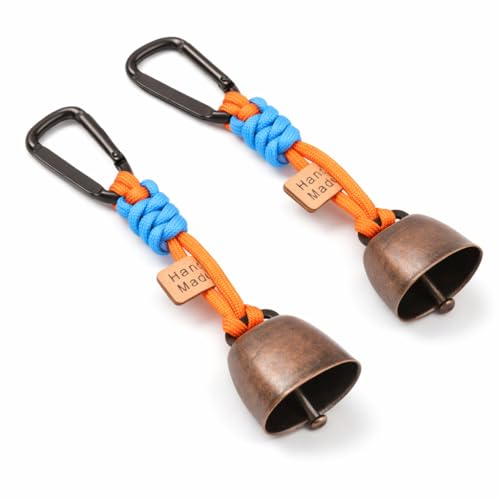
Search for gear for camping with bears and the first thing most listings put in front of you is a bear bell. Glacier National Park’s own bear safety page says, in plain words, that it does not work: “Bear bells are not adequate or effective.”
That is the shape of this whole subject. What keeps a camp safe is not a gadget; it is a container that meets a published standard, a spray you can reach without taking your pack off, a camp laid out so the smells are nowhere near where you sleep, and knowing which of the two species is standing in front of you, because the correct response to each is the opposite of the other.
Key takeaways
- Food storage rules are set park by park, not nationally. Hanging food is illegal throughout Yosemite; Yellowstone publishes a hanging specification.
- The NPS defines “food” as anything with a scent — sunscreen, lip balm, deodorant, bug repellent, fuel and empty containers included.
- IGBC certification is verified by matching the product number to the certified products list, not by looking for a logo.
- Bear spray has a published minimum specification: 7.6 oz, 25 feet, 6 seconds.
- Grizzly attack: play dead. Black bear attack: do not play dead. Getting this backwards is the dangerous error.
The rules are set by the park, not by the bear
There is no national food storage rule to memorise, and this is the first thing most guides get wrong. Two of the most famous bear parks in the country give opposite instructions.
Yosemite requires food to be stored in a bear-resistant container or a park food locker, and states flatly that hanging food is illegal throughout Yosemite. Its bear boxes exist only at designated sites in Little Yosemite Valley and next to the five High Sierra Camps, so a portable canister is the assumption everywhere else. The canister goes 25 to 50 feet from the tent, somewhere a bear cannot easily roll it away.
Yellowstone, by contrast, publishes a hanging specification for its backcountry: food goes 10 feet above the ground and 4 feet away from tree trunks, which needs at least 35 feet of rope to rig. It also asks you to sleep at least 100 yards from the core camp where you cooked, ate and hung the food, preferably upwind of it.
Glacier takes a third position again: all edible items, food containers empty or not, cookware clean or not, and trash including feminine hygiene products must be in a vehicle, in a designated food locker, or hung — day and night, not just overnight.
Read the regulations for the specific unit you are visiting before you pack, because the equipment you need is decided by that page and not by this one.
“Food” is a much wider category than you think
The Park Service is explicit that the word covers anything with a scent, and its own list runs well past dinner: canned goods, bottles, drinks, soaps, cosmetics, toiletries, trash, ice chests, sunscreen, bug repellent, fuel, and the items used for preparing or eating meals. Yosemite’s canister instructions add sunscreen, soap, mosquito repellent, lip balm, deodorant, medications and feminine products by name.
Two practical consequences follow. First, a canister sized only for your meals will not close on the day you finally add the toiletries, so buy volume for everything scented rather than for food alone. Second, the empty wrapper and the used cookware count. A rinsed pot left by the tent is a scented item that happens to contain nothing.
What “bear-resistant” actually certifies
The Interagency Grizzly Bear Committee runs the testing programme that the phrase refers to. Products are tested with captive grizzlies at the Grizzly & Wolf Discovery Center in West Yellowstone, Montana, and at the Washington State University Bear Center in Pullman, Washington, or by technical evaluation against IGBC standards for heavy metal items such as lockers and dumpsters. Nearly 500 products from more than 100 manufacturers are on the list.
Two things about that certification are worth knowing before you buy. Manufacturers are asked to print the IGBC Certified Bear-Resistant logo and their certification number on the product, but not all of them do — so, in the committee’s own words, the only way to verify a product is IGBC certified is to match the product number to the IGBC’s certified products list. A logo on a marketplace listing is not verification.
And the committee is direct about the limits: IGBC certification does not guarantee that a product is bear-proof, that it will never be breached, or that small amounts of the contents will not leak or spill out. It is a resistance standard, not a seal.
| Method | Where it applies | The published rule |
|---|---|---|
| Portable canister | Yosemite wilderness | 25–50 ft from camp, where it cannot be rolled away |
| Canister, general NPS guidance | Backpacking generally | Flat level ground, 100 ft or more from camp, away from cliffs and water |
| Hanging | Yellowstone backcountry | 10 ft up, 4 ft from the trunk, 35 ft of rope |
| Hanging | Yosemite | Illegal throughout the park |
| Vehicle or food locker | Glacier, and most developed campgrounds | Day and night, cookware and empty containers included |
Pro tip
Load the canister at home once before the trip, with the toiletries and the trash bag in it as well as the food. It is the only way to find out that five days of meals plus a bottle of sunscreen does not close, at a point where you can still do something about it.
Bear spray, to the specification
Bear spray is the item worth spending on, and it has a published specification rather than a marketing one. Grand Teton lists the minimum: net content of 7.6 oz or 215 grams, a spray distance of at least 25 feet, a discharge duration of at least 6 seconds, and an active ingredient of 1 to 2 percent capsaicin and related capsaicinoids. Anything below those numbers is a different product.
It must also be EPA approved and designed specifically for bears. The Park Service is blunt about the alternative: personal protection and law enforcement sprays are not strong enough to affect a bear’s senses, and many of them shoot a narrow stream rather than a dispersed cloud, which makes hitting a charging animal much harder.
Yellowstone’s guidance on timing is specific: spray when the bear is 30 to 60 feet away, and for a charging bear, deploy at 60 feet or less. Adjust for crosswind. And it has to be reachable — Grand Teton’s phrasing is that the canister is immediately available, not in your pack. A canister buried in a rucksack has the safety value of no canister at all. Check the expiry date before every trip.
Noise, groups and timing
The reason bear bells fail is that a bear does not hear them until you are already close. Glacier’s replacement advice is specific: calling out and clapping at regular intervals are better ways to make your presence known. Use your voice on blind corners, in dense brush and beside running water, which is where the noise you make is most likely to be swallowed.
Group size matters more than any purchase. Glacier states that there have not been any reported attacks on groups of four or more in the park. Yellowstone adds two conditions worth planning around: avoid hiking at dawn, dusk or at night, when grizzlies are most active, and note that its own research found people are more likely to be attacked when hiking off-trail.
Common mistake
Sleeping in the clothes you cooked in. They are a scented item by the Park Service’s own definition, and they are inside the tent with you. Change before bed and store the cooking layers with the food, not under your head.
If a bear turns up anyway
The Park Service’s encounter sequence is the same everywhere. Identify yourself by talking calmly so the bear knows you are human. Stay calm, then slowly wave your arms above your head and tell it to back off. Do not run and do not make sudden movements. If the bear is stationary, move away slowly and sideways, which keeps it in view and keeps you from tripping. Avoid loud noises or screams — a scream can read as the sound of a prey animal.
If contact actually happens, the response splits by species, and this is the one thing on this page to commit to memory.
Brown or grizzly bear: leave your pack on and play dead. Lie flat on your stomach with your hands clasped behind your neck.
Black bear: do not play dead. Escape to a secure place such as a car or a building. If escape is not possible, fight back with any object available.
Getting these the wrong way round is the failure this whole page exists to prevent, and it costs nothing to learn.
Laying out a camp that does not invite one
Separation is the principle: the place you sleep, the place you cook and the place the food is stored should be three different places. Yellowstone’s 100 yards between the sleeping area and the core camp, ideally upwind, is the clearest published version of it.
The rest is housekeeping. Wash dirty dishes immediately rather than at the end of the evening. Pack out all uneaten food and food particles — the Park Service asks that none of it be disposed of in the wilderness. Keep the container away from cliffs and water, so that a bear that does get hold of it cannot send it somewhere unrecoverable. And treat the empty ice chest and the empty bottle as full, because a bear cannot tell the difference from downwind.
Frequently asked questions
Do bear bells work?
Glacier National Park states that bear bells are not adequate or effective, because a bear will not hear them until you are already close. The park recommends calling out and clapping at regular intervals instead.
Do I need a bear canister, or can I hang my food?
It depends entirely on the park. Hanging food is illegal throughout Yosemite, which requires a container or a food locker. Yellowstone publishes a hanging specification for its backcountry: 10 feet up, 4 feet from the trunk, using at least 35 feet of rope. Check the regulations for the unit you are visiting.
How do I know a canister is genuinely certified?
Match its product number against the IGBC’s certified products list. The committee notes that not every manufacturer prints the logo, so the number is the only reliable check — and that certification means bear-resistant, not bear-proof.
What bear spray should I buy?
One that is EPA approved and specifically designed for bears, with at least 7.6 oz of content, a spray distance of at least 25 feet, a duration of at least 6 seconds, and 1 to 2 percent capsaicin and related capsaicinoids. Carry it where you can reach it without opening your pack, and check the expiry date before the trip.
Should I play dead if a bear attacks?
Only with a brown or grizzly bear: leave your pack on, lie flat on your stomach and clasp your hands behind your neck. With a black bear, do not play dead — get to a car or a building, and if you cannot, fight back with whatever you have.
Does anything besides food need storing?
Yes. The Park Service treats anything scented as food: soaps, cosmetics, toiletries, sunscreen, bug repellent, fuel, trash, cookware and empty containers. Yosemite names lip balm, deodorant, medications and feminine products specifically.