Rock Plate vs No Rock Plate Running: What the Rules Actually Cover
Contents
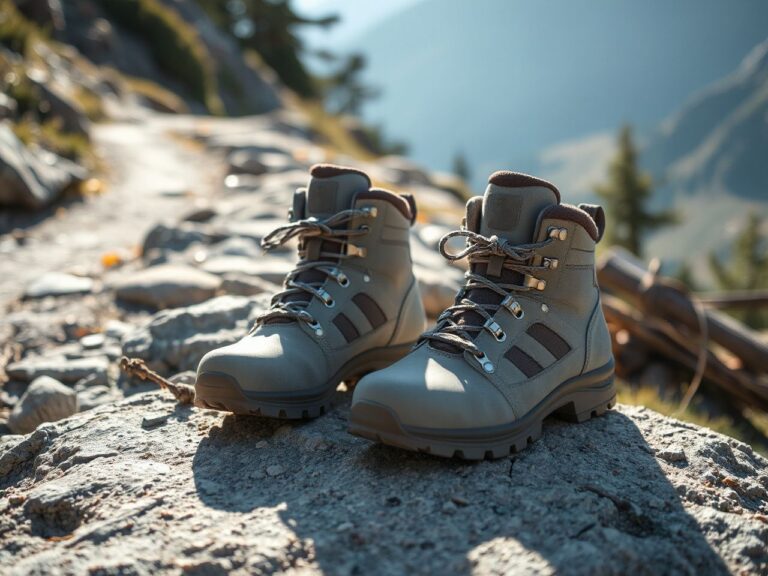
The honest answer is that the rock plate vs no rock plate running decision is yours alone, because nobody else is checking. A rock plate is a stiff insert in the sole of a trail shoe, meant to spread the load of a stone strike across a wider area of the foot instead of letting it arrive at a single point. That is a real piece of engineering. What it is not is a regulated one. The words on the box are written by the company selling the shoe, and no test has to be passed first.
The odd part is that the same hazard, at work, is governed in close detail. Where a sharp object underfoot is a workplace risk, federal regulation names it, names the standards that define protection against it, and places the duty on a named party. Step off a job site onto a trail and every one of those mechanisms falls away at once — which tells you how much weight to give the marketing, and how much to give your own legs.
Key takeaways
- The Occupational Safety and Health Administration names “objects piercing the sole” as a hazard obliging an employer to ensure protective footwear is used.
- That same trigger wording appears in OSHA’s general industry, shipyard employment and longshoring rules.
- The regulation defers the meaning of “protective” to named consensus standards, including ASTM F-2412-2005 and ASTM F-2413-2005, plus ANSI editions from 1999 and 1991.
- World Athletics limits rigid structures in shoes, but Regulation 8 and the sole thickness table do not apply to Mountain and Trail Races.
- Its stated aim is fairness and “the primacy of human endeavour over technology”, not protecting a foot from a stone — a word the document never uses.
What a rock plate actually does
Mechanically the idea is simple. A pointed rock pressing into a soft midsole concentrates force into a small patch of foot. A stiff sheet above the outsole resists local bending, so the same load is carried across a broader region and arrives flatter and duller. The stiffer and more continuous that sheet, the more it flattens the input — and the less of the ground you feel through it. That trade-off is not a flaw in the design; it is the design.
At work, sole puncture is a named hazard
Here is the contrast. The Occupational Safety and Health Administration’s general industry foot protection rule, 29 CFR 1910.136, states that an employer “shall ensure that each affected employee uses protective footwear when working in areas where there is a danger of foot injuries due to falling or rolling objects, or objects piercing the sole,” among other listed hazards. Sole piercing sits in the operative sentence, not in a footnote.
The phrase is not unique to one industry. OSHA‘s shipyard employment standard and its longshoring standard both require protective footwear where there is a danger of foot injuries from falling or rolling objects “or objects piercing the sole.” Construction has its own foot protection section, titled “Occupational foot protection”, which still specifies safety-toe footwear meeting an ANSI standard dated 1967.
There is a survey step before any purchase, too: under 29 CFR 1910.132(d)(1), “the employer shall assess the workplace to determine if hazards are present, or are likely to be present.” OSHA’s guidance booklet on personal protective equipment, publication OSHA 3151-02R 2023, lists “sharp objects that could poke, cut, stab or puncture” among what to look for.
Who decides what counts as protective
The regulation outsources the word. Under 29 CFR 1910.136, protective footwear “must comply with any of the following consensus standards,” and then names them: ASTM F-2412-2005, “Standard Test Methods for Foot Protection,” and ASTM F-2413-2005, “Standard Specification for Performance Requirements for Protective Footwear,” alongside ANSI Z41-1999 and an older ANSI edition from 1991. Note the dates: those are the editions the rule points at, and the published amendment history shows the section was last amended in 2014.
Privately written test methods acquire legal weight through incorporation by reference: 29 CFR 1910.6 lists ASTM F-2413-2005 as approved for section 1910.136, and states that standards incorporated by reference there “have the same force and effect as other standards in this part.” The escape hatch is demanding: footwear outside those standards still complies if it is footwear “that the employer demonstrates is at least as effective.” The burden is to demonstrate equivalence — not to assert it, and not to print it on a box.
Why none of it reaches a trail shoe
The structure rests on an employment relationship. The duty described in the Occupational Safety and Health Act of 1970 runs from an employer who “shall furnish to each of his employees employment and a place of employment which are free from recognized hazards that are causing or are likely to cause death or serious physical harm to his employees.” That is the hinge: someone who owes a duty, someone owed it, a written standard to measure it against. A runner on an evening loop has none of those parties, and no rule in that scheme reaches them.
OSHA is candid about its own material: the guidance booklet says “this guidance is not a standard or regulation, and it creates no new legal obligations,” and it states an absence where one exists — “for hand protection, there is no ANSI standard for gloves but OSHA recommends that selection be based upon the tasks to be performed and the performance and construction characteristics of the glove material.” That is the tone to borrow. Name the gap; do not dress it up.
The sport’s rulebook regulates plates, then excuses trail
Running does have a body writing rules about stiff structures in shoes. World Athletics publishes Athletic Shoe Regulations, approved on 19 March 2026 and effective from 20 April 2026, and they do what you would expect. Regulation 8.5.1 says a shoe “must not contain more than one rigid structure if it is a non-spike Athletic Shoe.” Appendix 2 caps sole thickness at 40mm for road and 20mm for most track events.
Trail shoes sit inside the document’s own definition, which states that an “Athletic Shoe” means “track and field, road, cross-country, mountain and/or trail shoes.” Then it takes them back out. Regulation 3.3, repeated under Appendix 2, says the sole thickness table “and the requirements stated in Regulation 8 do not apply to Athletic Shoes worn in … Cross Country Races and Mountain and Trail Races.”
It was never about rocks. World Athletics gives its purpose as ensuring performances “are achieved through the primacy of human endeavour over technology in Athletic Shoes.” It counts rigid structures rather than testing them, and “rigid structure” is not among the document’s specific definitions. The regulations state that “the primary purpose of an Athletic Shoe is to give protection and stability to the feet and a grip on the ground,” then set no protective performance requirement after it. The words “rock plate”, “puncture”, “pierce” and “stone” appear nowhere in it.
| Question | Footwear worn at work | A trail shoe on a public trail |
|---|---|---|
| What triggers a requirement? | “Objects piercing the sole”, named in the general industry, shipyard and longshoring rules | Nothing; World Athletics never uses the words puncture or stone |
| Who owes the duty? | The employer, to affected employees | The runner, to themselves |
| Formal hazard assessment? | Yes, required by 29 CFR 1910.132(d)(1) | Your own reading of the terrain |
| What defines “protective”? | ASTM F-2412-2005, F-2413-2005, ANSI Z41-1999 and a 1991 ANSI edition | Whatever the maker chooses to describe |
| Alternative route to compliance? | Footwear the employer demonstrates is “at least as effective” | Not applicable; nothing to comply with |
Pro tip
The advice OSHA gives buyers inside the regulated system is the advice that has to carry the unregulated case as well. Its guidance says that “different footwear protects in different ways. Check the product’s labeling or consult the manufacturer to make sure the footwear will protect the user from the hazards they face.” If that caution is needed where a named test exists, it is doubly needed where none does. Ask what the plate is made of, where it sits, and how thick it is.
Choosing with the trade-off in front of you
Once the regulatory question is settled, this becomes a craft decision answered by terrain and duration. Smooth, packed, grassy or sandy ground gives a plate almost nothing to do, and the stiffness is a cost paid for no return. Loose granite, embedded scree, chunky limestone and old riverbed are the opposite: they deliver small sharp inputs continuously, and late in a long day the tally registers as a general soreness across the whole underside of the foot rather than any single event. A runner placing their feet precisely on technical ground, though, often finds a stiff forefoot works against them, because the shoe stops reporting what it is standing on.
Common mistake
Treating “rock plate” as a specification rather than a description. In the workplace scheme, protective is anchored to named test methods with legal force behind them. Nothing anchors the phrase on a trail shoe: two shoes can both claim underfoot protection while containing different materials, in different places, at different thicknesses. Compare the described construction, and failing that, how they feel on ground you already know.
Frequently asked questions
What is a rock plate in a trail running shoe?
A stiff insert in the sole that spreads the load of a stone strike over a wider area instead of letting it land at one point. It may run full length or sit under the forefoot only. The name describes an intent, not a construction.
Is there a legal standard governing rock plates in trail shoes?
No rule reaches one. Federal workplace regulation names objects piercing the sole as a hazard and defers the meaning of protective footwear to named consensus standards, but that duty exists between an employer and employees. World Athletics, whose regulations do govern rigid structures in running shoes, exempts Mountain and Trail Races from the relevant regulation.
Does the OSHA footwear rule apply to a running shoe?
Not on a trail. The rule at 29 CFR 1910.136 requires an employer to ensure protective footwear is used where there is a danger of injury from objects piercing the sole. It runs from an employer to employees at a workplace, so it says nothing about a private run.
What do the World Athletics rules say about plates?
Regulation 8.5.1 states that a non-spike Athletic Shoe “must not contain more than one rigid structure.” That counts plates rather than testing them, and exists to keep competition fair — the stated aim being “the primacy of human endeavour over technology.” Regulation 3.3 then removes Mountain and Trail Races from Regulation 8.
Does a rock plate change how a shoe feels?
Yes, and it is the main thing to weigh. A stiffer sole reports less about the surface beneath it, so technical ground reads vaguer underfoot. It also resists forefoot flex, which some runners notice on climbs and steep switchbacks.
How can you tell whether a shoe has one before buying?
Read the construction description rather than the headline, and ask for specifics: material, placement, and whether it is full length or forefoot only. Federal guidance already tells buyers in the regulated setting to consult the manufacturer. Here, that conversation is all there is.