

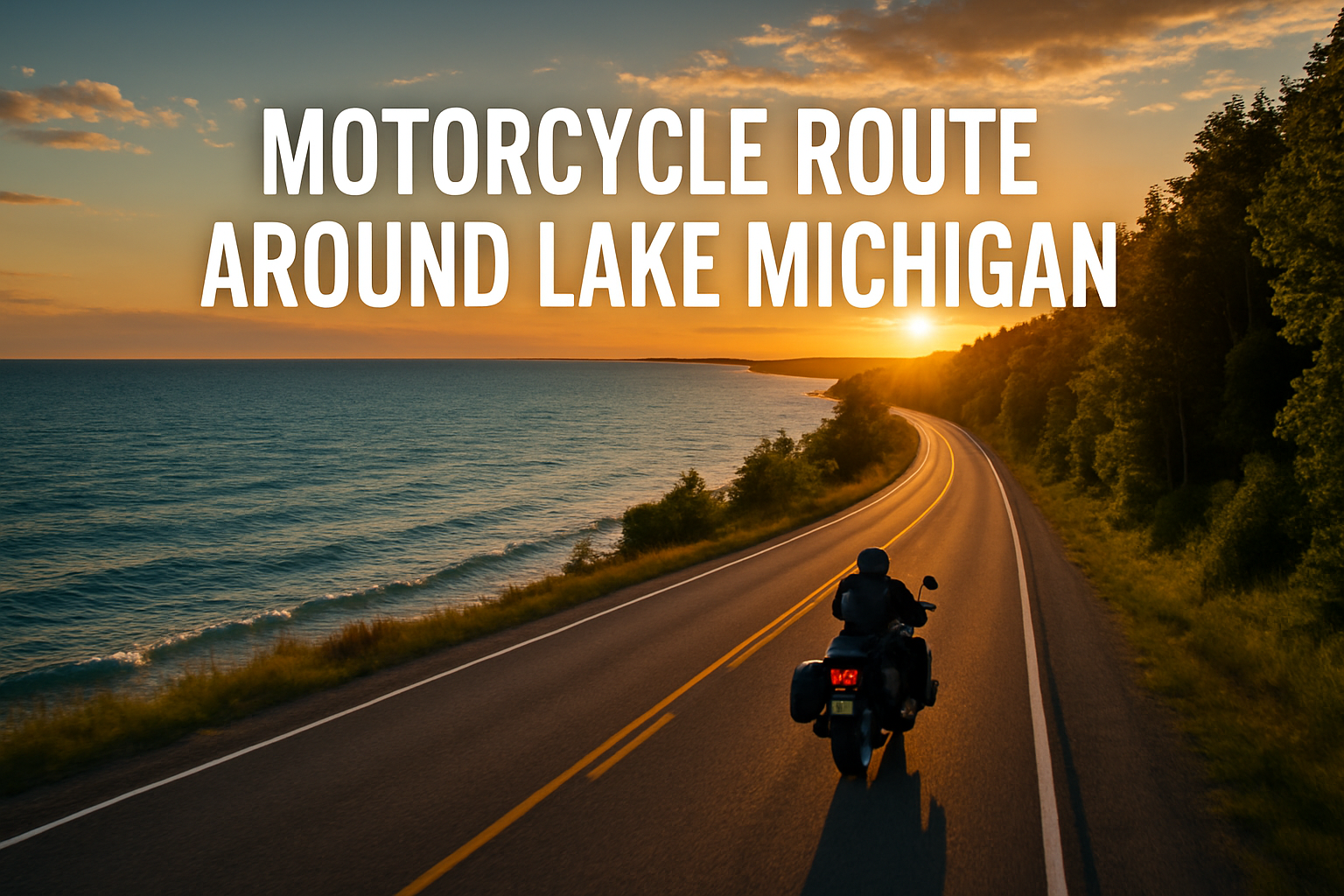
The Great Lakes region offers some of the most scenic and varied motorcycle touring available in North America, and a motorcycle route around Lake Michigan stands as one of the premier multi-day adventures for riders seeking coastal highways, charming harbor towns, and endless water vistas. This circular journey covers approximately 1,100 miles through four states, combining lighthouse-dotted shorelines with rolling dunes, ferry crossings, and cultural destinations that reward those who take time to explore beyond the pavement.
Lake Michigan, the only Great Lake located entirely within the United States, provides riders with a unique opportunity to experience both the rugged wilderness of Michigan’s Upper Peninsula and the sophisticated urban landscape of Chicago, all within a single loop. The route accommodates various riding styles and schedules, from aggressive sport-touring riders who can complete the circuit in two or three days to leisurely adventure tourists who prefer to stretch the journey over a week or more, savoring local cuisine and historical landmarks along the way.
This guide covers essential planning considerations, route options, seasonal timing, gear recommendations, and practical tips for navigating the motorcycle route around Lake Michigan. Whether targeting the peak summer season or the quieter shoulder months, riders will find detailed information to help maximize this distinctive Great Lakes adventure.
Quick Reference Information
| Factor | Details |
|---|---|
| Total Distance | Approximately 1,100 miles (complete loop) |
| States Covered | Michigan, Wisconsin, Illinois, Indiana |
| Best Riding Season | Late May through September (peak: June-August) |
| Recommended Duration | 4-7 days (allows for sightseeing and rest) |
| Difficulty Level | Easy to Moderate (mostly paved roads, some traffic) |
| Essential Gear | Rain gear, layers for temperature changes, tank bag for maps/phone |
Planning Your Lake Michigan Loop
A motorcycle route around Lake Michigan requires strategic planning to balance riding time, sight-seeing stops, and lodging availability. The complete loop can be ridden in either clockwise or counterclockwise direction, though many riders prefer the counterclockwise approach starting from Chicago or Milwaukee, which places the lake on the right side throughout most of the eastern Michigan coastline. This orientation provides better views and easier access to lakeside pullouts and scenic overlooks.
The route divides naturally into four segments of varying character. The western shore through Wisconsin offers smaller towns, agricultural landscapes, and the Door County peninsula with its maritime heritage. The northern route across Michigan’s Upper Peninsula features the Apostle Islands National Lakeshore area and remote stretches between communities. The eastern shore down Michigan’s Lower Peninsula showcases the state’s famous lighthouse coast, sand dunes, and resort communities. Finally, the southern route through Indiana and Illinois brings urban challenges, industrial history, and the metropolitan complexity of Chicago.
Timing significantly impacts the riding experience. Peak summer months from June through August deliver the warmest temperatures and longest daylight hours, but also bring maximum tourist traffic, higher accommodation prices, and crowded attractions in popular destinations like Mackinac Island, Traverse City, and Door County. Shoulder season riding in May or September offers cooler temperatures, thinner crowds, and often more affordable lodging, though some seasonal businesses may have limited hours or closures.
Most riders allocate four to seven days for the complete circuit, averaging 150-275 miles per day. This pace allows time for ferry rides, lighthouse visits, beach stops, and meal breaks without excessive saddle time. Budget planning should account for fuel costs, lodging ranging from budget motels ($70-100 per night) to mid-range hotels ($120-180), meals, and attractions. A typical week-long trip runs $800-1,500 per rider depending on accommodation choices and dining preferences.
Route Options and Key Highways
The primary route around Lake Michigan follows a combination of US and state highways that hug the shoreline with varying proximity to the water. No single designated route exists, giving riders flexibility to customize their journey based on priorities, but several core highways form the backbone of most loops. Understanding these main arteries helps with navigation and planning daily segments.
Starting from the Chicago area and moving counterclockwise, riders typically follow US-41 and I-94 north through Illinois and into Wisconsin. Around Milwaukee, the route transitions to I-43 and Wisconsin Highway 42, which leads to the scenic Door County peninsula. This northeastern Wisconsin region deserves extended time, with twisting coastal roads connecting towns like Sturgeon Bay, Egg Harbor, and Washington Island (accessible via ferry). The rural character and frequent water views make this segment particularly rewarding for motorcyclists.
Crossing into Michigan’s Upper Peninsula, riders follow US-2 west to east across the northern shore, passing through Escanaba, Manistique, and eventually reaching St. Ignace. This stretch presents the most remote riding, with longer distances between services and fewer commercial developments. The landscape transitions from coastal marshlands to forested terrain with periodic lake glimpses. The Mackinac Bridge crossing from St. Ignace to Mackinaw City represents a highlight moment, though riders should prepare for potential wind on the five-mile span.
The eastern shore down Michigan’s Lower Peninsula offers the most diverse route options. US-31 serves as the primary north-south artery, but numerous coastal alternatives provide closer water access and more engaging riding. M-119 north of Harbor Springs, known as the “Tunnel of Trees,” delivers 27 miles of twisting pavement beneath forest canopy. Further south, M-22 circles the Leelanau Peninsula and passes Sleeping Bear Dunes National Lakeshore, offering expansive lake vistas and rolling terrain. The coastal route continues through Ludington, Muskegon, and Holland before reaching the Indiana border.
The southern segment through Indiana and back to Chicago presents the least scenic portion, with industrial development, urban sprawl, and heavier traffic dominating the landscape. US-12 and US-20 provide the most direct routes, though Indiana Dunes National Park near Chesterton offers a worthwhile detour. Chicago navigation challenges riders with complex interstate systems and dense traffic; many riders opt to complete this segment early morning or late evening to minimize congestion.
Seasonal Considerations and Weather Patterns
Weather significantly influences the riding experience on a motorcycle route around Lake Michigan, with conditions varying substantially by season and geographic location. Lake Michigan itself moderates temperatures along the immediate coastline, creating microclimates that can differ from inland areas by 10-15 degrees Fahrenheit. Understanding these patterns helps riders pack appropriately and adjust timing for optimal conditions.
Spring riding from late April through May presents unpredictable conditions with temperatures ranging from the 40s to 70s Fahrenheit. Snow remains possible in the Upper Peninsula through early May, and rain occurs frequently as winter moisture patterns transition to summer. Spring offers minimal tourist traffic and vibrant green landscapes, but riders must pack comprehensive rain gear and layering options. Some seasonal businesses, particularly in Door County and northern Michigan resort areas, may not open until Memorial Day weekend.
Summer from June through August delivers the most reliable riding weather, with daytime temperatures typically in the 70s and 80s along the coast. Humidity increases in July and August, particularly on the southern portions of the route. Afternoon thunderstorms develop regularly in summer, often rolling off the lake with little warning. The National Weather Service provides detailed marine forecasts that help anticipate these systems. Summer also brings peak tourist season, requiring advance lodging reservations in popular destinations.
Fall riding from September through October offers excellent conditions for those seeking fewer crowds and spectacular autumn colors. September temperatures remain pleasant, typically in the 60s and 70s, while October brings cooler conditions with nighttime temperatures dropping into the 40s. Fall color peaks vary by latitude, with the Upper Peninsula reaching prime viewing in late September and southern Michigan peaking in mid-October. Wind increases in fall, and lake-effect weather patterns become more pronounced.
Winter riding around Lake Michigan is generally not recommended due to snow, ice, and freezing temperatures. Most of the route experiences significant snowfall, particularly in Michigan’s western shore where lake-effect snow bands deposit substantial accumulations. Roads may remain snow-covered or ice-patched from November through March in northern sections.
Must-See Stops and Attractions
A motorcycle route around Lake Michigan passes dozens of worthwhile stops, from natural landmarks to cultural attractions. Strategic selection based on personal interests enhances the journey without creating an exhausting checklist. Several destinations stand out as particularly significant or representative of the region’s character.
Mackinac Island, accessible via ferry from Mackinaw City or St. Ignace, offers a unique step back in time where motor vehicles are prohibited and horse-drawn carriages provide transportation. Riders must leave motorcycles in ferry parking lots, but the island’s historic Grand Hotel, fudge shops, and Victorian architecture make the detour worthwhile. Plan 3-4 hours minimum for a satisfying visit, or consider overnight stays for a more relaxed experience.
Sleeping Bear Dunes National Lakeshore along Michigan’s western shore features towering sand dunes, forested hiking trails, and the scenic Pierce Stocking Scenic Drive. The park’s overlooks provide panoramic lake views, and the small town of Glen Arbor serves as a convenient base with motorcycle-friendly restaurants and shops. The 7.4-mile Pierce Stocking loop makes an excellent side trip, though riders should watch for tourist traffic during peak season.
Door County, Wisconsin’s thumb-shaped peninsula presents concentrated attractions including fish boils (a regional culinary tradition), cherry orchards, maritime museums, and the historic Washington Island ferry. The smaller roads connecting towns like Fish Creek, Sister Bay, and Ellison Bay offer engaging riding with frequent lake views. Allocate at least a full day to properly explore this region, or consider spending a night in Sturgeon Bay or one of the smaller coastal communities.
Chicago represents the metropolitan anchor of the route, offering world-class museums, architecture, dining, and cultural attractions. Riding through the city presents challenges, but those willing to navigate urban traffic can enjoy lakefront parkways and the famous Michigan Avenue corridor. Many riders choose to base overnight in suburban areas and take public transportation into the city center to avoid downtown parking and traffic complications.
Numerous lighthouses dot the entire coastline, with Michigan alone hosting more than 100 historic structures. Notable examples include Point Betsie near Frankfort, Big Sable Point near Ludington, and Grand Haven’s iconic pier lights. Many offer tours during summer months, and their photogenic settings make excellent break spots.
Pro Tips for Riding Around Lake Michigan
Experienced riders who have completed the Lake Michigan loop multiple times consistently emphasize the importance of building flexibility into the schedule. Weather on the Great Lakes can change rapidly, and forcing a rigid itinerary during poor conditions diminishes enjoyment. Adding one or two buffer days allows riders to wait out severe weather, extend time in particularly appealing locations, or address mechanical issues without derailing the entire trip. This approach transforms potential frustrations into opportunities for spontaneous discoveries.
Ferry crossings present unique opportunities and potential bottlenecks. The SS Badger ferry between Manitowoc, Wisconsin and Ludington, Michigan offers a four-hour lake crossing that shortens the total riding distance and provides a distinctive mid-trip experience. However, reservations are essential during summer weekends, and the schedule may not align with all riding plans. The Washington Island ferry in Door County and the Mackinac Island ferries operate on more frequent schedules but can still experience waits during peak periods. Check current schedules and reservation policies before arriving.
Fuel planning requires attention in remote sections, particularly across Michigan’s Upper Peninsula between Escanaba and St. Ignace. Stretches of 50-70 miles between services occur regularly in this region. Riders on motorcycles with limited fuel capacity should top off tanks whenever passing through towns, even if not approaching reserve. Small-town gas stations may close early or have limited weekend hours, so filling up before evening stops prevents morning delays.
Accommodation strategies vary based on budget and flexibility preferences. Booking two or three nights in advance while leaving other nights open provides structure without complete rigidity. Popular weekend destinations like Traverse City, Door County, and Mackinac Island area hotels fill quickly during summer, often requiring reservations weeks ahead. Less tourist-focused communities like Manistique, Ludington, or Michigan City typically offer last-minute availability except during major event weekends. Chain hotels in these smaller cities often provide better value than independent properties in resort towns.
Navigation tools should include both electronic and paper backup options. Cell service gaps exist throughout the route, particularly in the Upper Peninsula and rural Wisconsin sections. Downloaded offline maps for smartphones provide excellent turn-by-turn guidance without data connections. However, a paper atlas or printed route notes offer fail-safe backup if electronics fail or batteries die. The route’s general “follow the coastline” logic makes navigation relatively intuitive, but specific turns and route number changes benefit from reliable guidance.
Local cuisine presents opportunities to experience regional specialties. Wisconsin fish boils and cheese curds, Michigan pasties (hand pies imported by Cornish miners), Chicago deep-dish pizza, and fresh Great Lakes fish appear throughout the route. Small-town diners and family restaurants often provide the most authentic experiences at reasonable prices. Many riders find these local establishments more memorable than chain restaurants and easier to access on motorcycles with simpler parking arrangements.
Photography opportunities abound, but riders should carry cameras in accessible, weather-protected locations. Tank bags with clear map pockets work well for phones or small cameras that need quick access. Scenic overlooks and pullouts appear frequently along the route, and missing a shot while fumbling with luggage or stopping to unpack gear reduces spontaneity. Weather protection remains critical, as sudden rain showers can damage unprotected electronics.
Frequently Asked Questions
How many days does it take to ride around Lake Michigan?
Most riders complete the motorcycle route around Lake Michigan in four to seven days, depending on pace and sight-seeing priorities. Aggressive riders can finish the approximately 1,100-mile loop in three days by maintaining 350-400 mile daily averages, but this approach leaves minimal time for attractions and becomes exhausting for many riders. A five-day itinerary averaging 220 miles per day provides balanced riding time and opportunities to explore major destinations like Door County, Mackinac Island, and Sleeping Bear Dunes. Riders preferring a leisurely pace with extensive sight-seeing often extend the trip to a full week or more.
What is the best direction to ride the Lake Michigan loop?
Both clockwise and counterclockwise directions work well, though many riders prefer counterclockwise (starting north from Chicago through Wisconsin) for several reasons. This direction places the lake on the right side during much of the scenic eastern Michigan shoreline, making pullout access easier and views more immediate for riders. Additionally, the counterclockwise route saves the more challenging Chicago urban riding for the end when riders have established their touring rhythm. However, clockwise routing offers advantages for those starting from the eastern side or wanting to tackle the Upper Peninsula earlier in the trip when energy levels are highest. Wind direction occasionally influences this choice, as prevailing westerly winds provide a slight tailwind advantage for counterclockwise routing.
Is the Lake Michigan motorcycle route suitable for beginner riders?
The Lake Michigan loop accommodates beginner riders reasonably well, with mostly straight, well-maintained highways and minimal technical challenges. New riders should possess competence with highway speeds, as significant portions follow major US routes with 55-65 mph limits. The route includes minimal aggressive curves or elevation changes compared to mountain touring, making it less demanding technically. However, beginners should prepare for longer daily distances than they may have previously attempted and develop stamina for multiple consecutive riding days. Navigation through Chicago and Milwaukee presents the most challenging riding, though these urban sections can be bypassed or tackled during low-traffic periods. First-time touring riders often find this route more approachable than mountainous alternatives while still offering legitimate adventure touring experiences.
When is the best time of year for riding around Lake Michigan?
The optimal riding window extends from late May through September, with June and early September offering the best combination of pleasant weather and manageable crowds. July and August provide the warmest temperatures and most reliable sunshine but coincide with peak tourist season, resulting in higher lodging costs, crowded attractions, and heavier traffic in popular destinations like Traverse City and Door County. Late